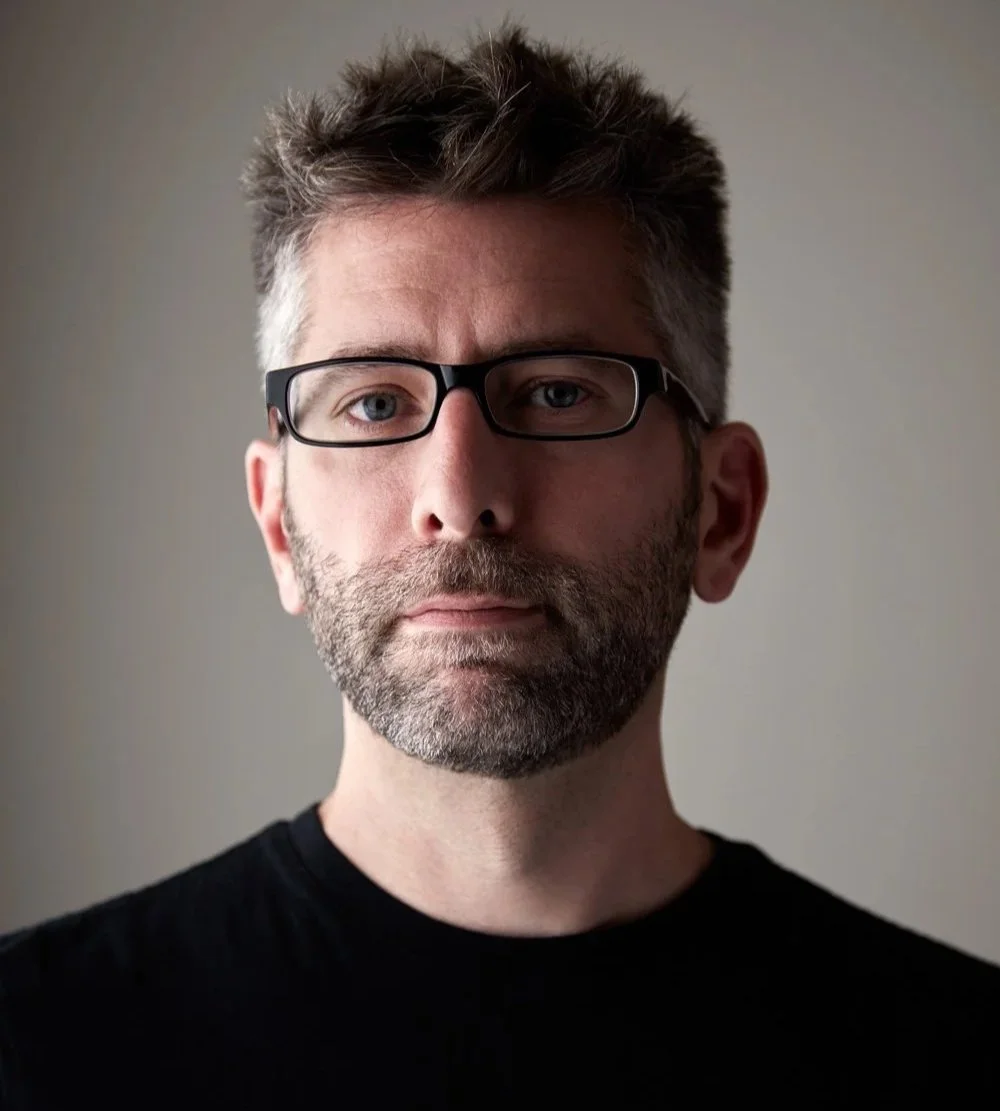
Brian McCarty is a Photographer, Fulbright Specialist, Board Member for the International Toy Research Association (ITRA), and the Executive Director of the War Toys® nonprofit organization. While comfortable in the studio, Brian's preferred approach is to integrate toy characters into real-life situations through the use of forced perspective, working in-camera with minimal postproduction.
Since graduating Parsons School of Design in 1996, Brian has worked for and with some of the bigger names in the toy industry, including Mattel, Hasbro, Disney, Cartoon Network, and Nickelodeon. His unique photography has not only driven millions in sales, it has also earned wide-recognition and praise within the art world. His first monograph Art-Toys was published in 2010 and featured collaborations with toymakers and designers who also use toys as mediums for artistic expression. Brian’s independent series War-Toys launched soon after in 2011. Since then, he has collaborated with children from Iraq, Syria, Israel, the West Bank, Gaza Strip, and Lebanon to tell their stories, working through local and international NGOs and UN agencies.
In 2019, War Toys® became a nonprofit organization, built from nearly a decade of work in the field. Seeing firsthand the severe effects of trauma and displacement on these children, Brian assembled a team of directors, advisors, and officers that includes experts in expressive therapy, childhood development, human rights, and toy design & manufacturing. Together, they are continuing the advocacy work of the photo series while developing new programs and forging alliances that will positively impact the lives of children around the world.
Brian’s work has been exhibited by museums and universities, acquired by prominent collectors, and covered by The New York Times, Washington Post, Guardian, Wired, Al-Jazeera, Reuters, Buzzfeed, Huffington Post, and countless other publications around the world. He’s appeared on CNN, NPR, PBS News Hour, Fox News, and BBC World Service. He has lectured at the Carter Presidential Library, New School, USC Keck School of Medicine, Brown University, Sesame Workshop, American University of Beirut, and TEDx. He’s seen his work used as a billboard in Times Square and stolen by ISIS for online propaganda. Brian understands how much toys shape and reflect our culture.
Collateral: What is War Toys?
Brian McCarty: War Toys started as a photo series and became a calling. When I first decided to restart and expand the series, I really focused on the methodology and treated the project like it was an artistic or academic endeavor. All of that went out the window as soon as I saw a little girl coloring in pools of blood. This work changes you, because of course it does. You can’t witness that much death and destruction without wanting to do something, ANYTHING to help these kids. So War Toys became a nonprofit organization, and I’ve committed myself to making as much of an impact as possible, using everything gained from a decade of fieldwork and a long career working with toys.
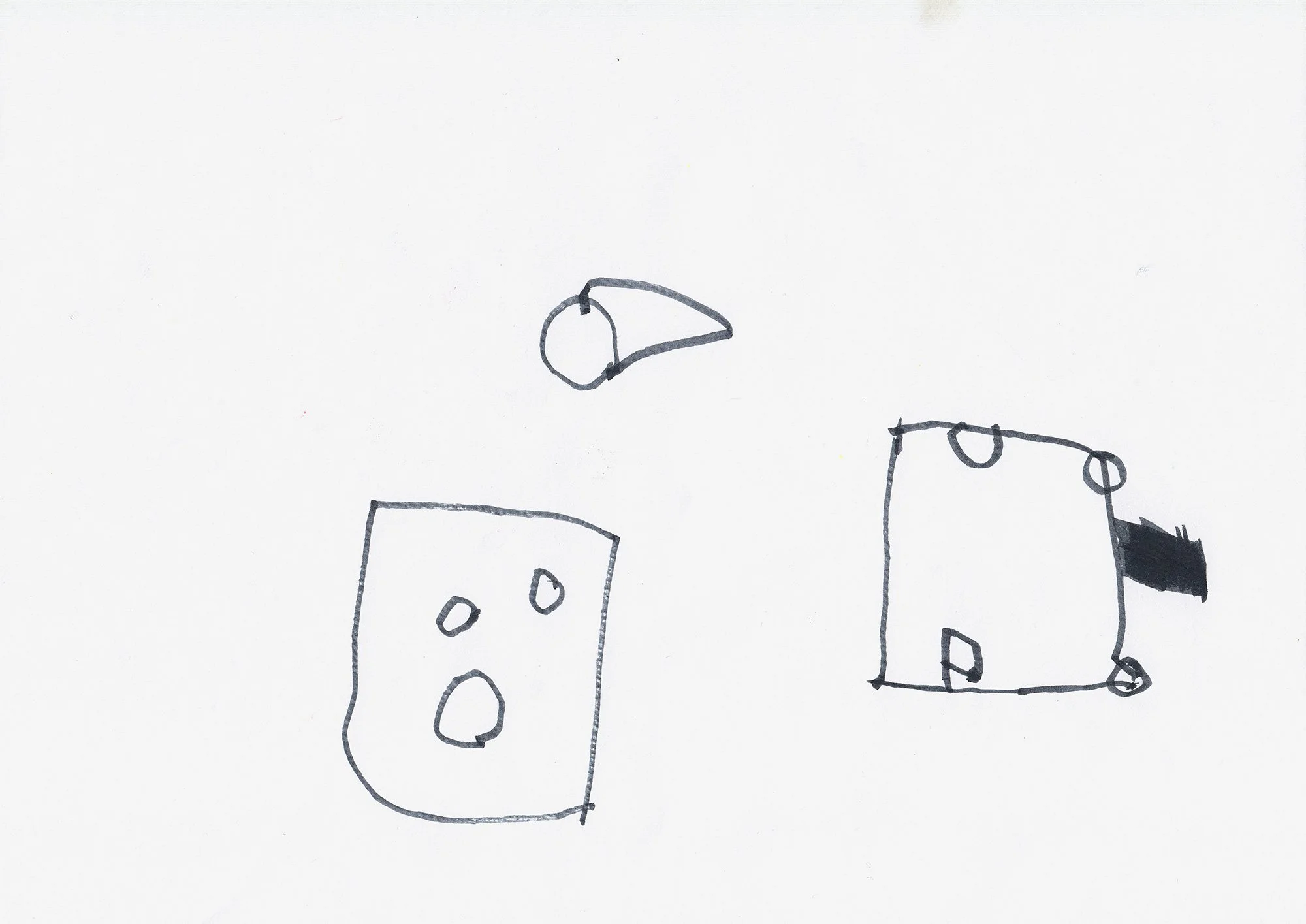
Boy Afraid
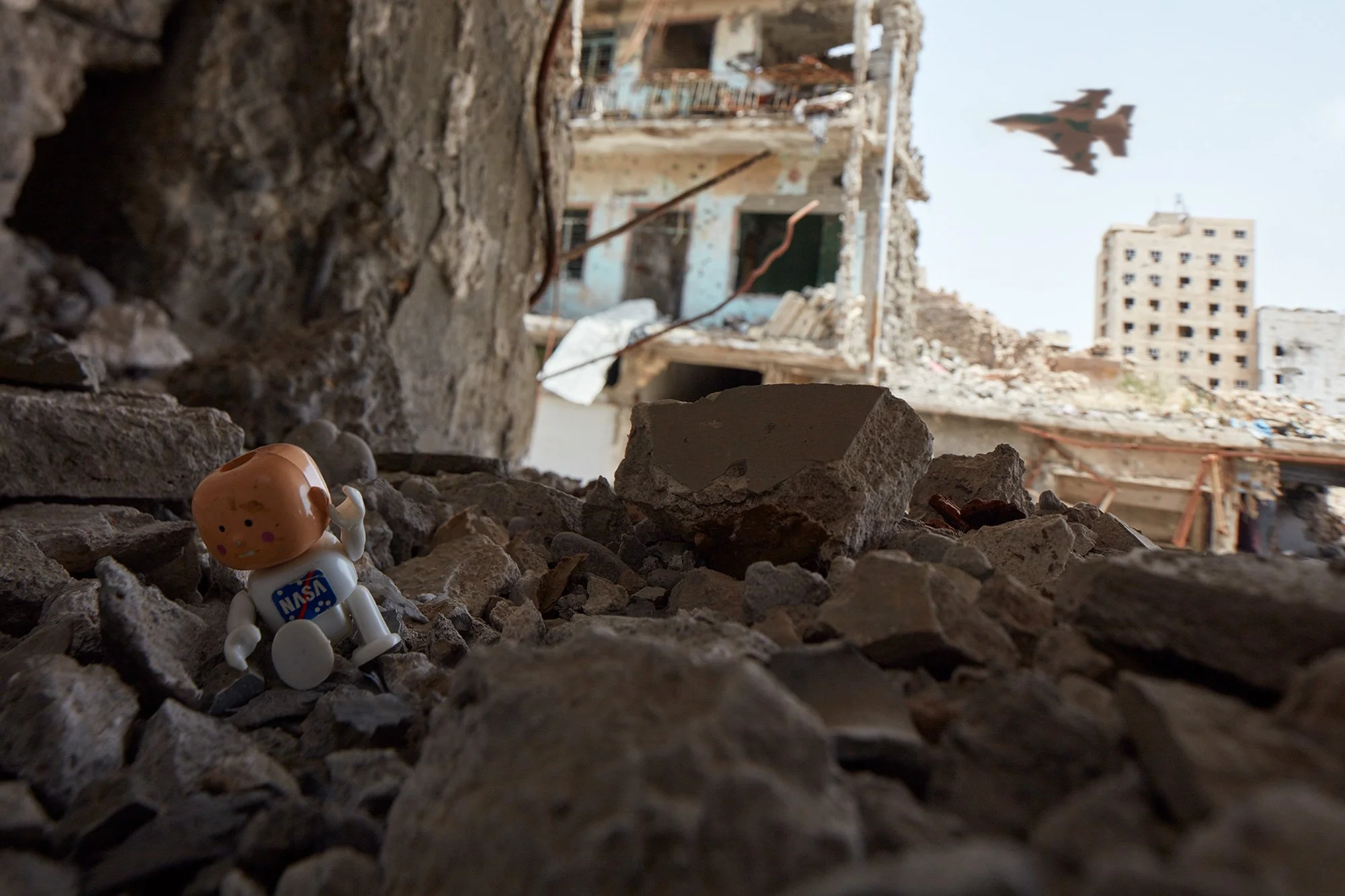
Boy Afraid
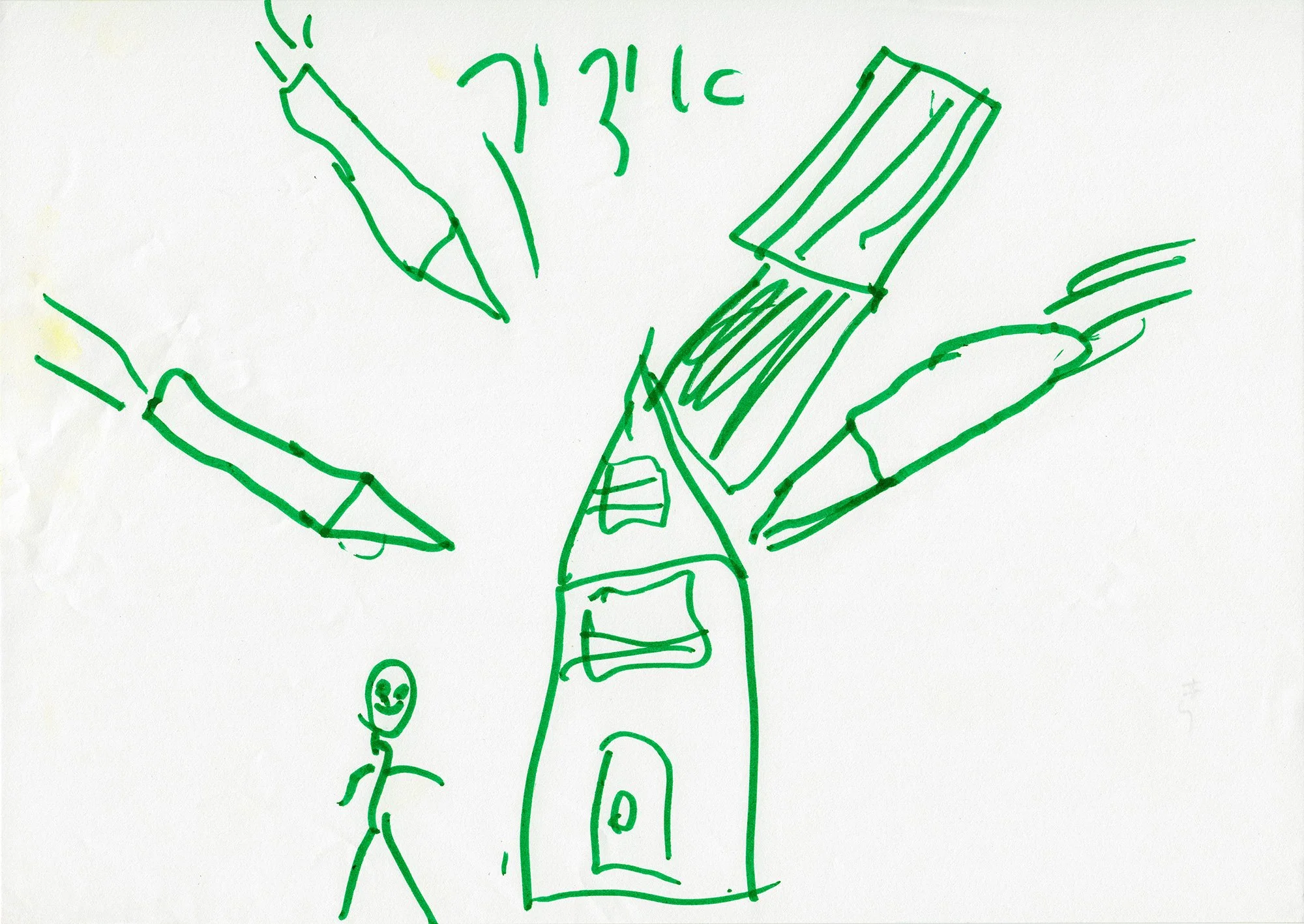
Sderot Home
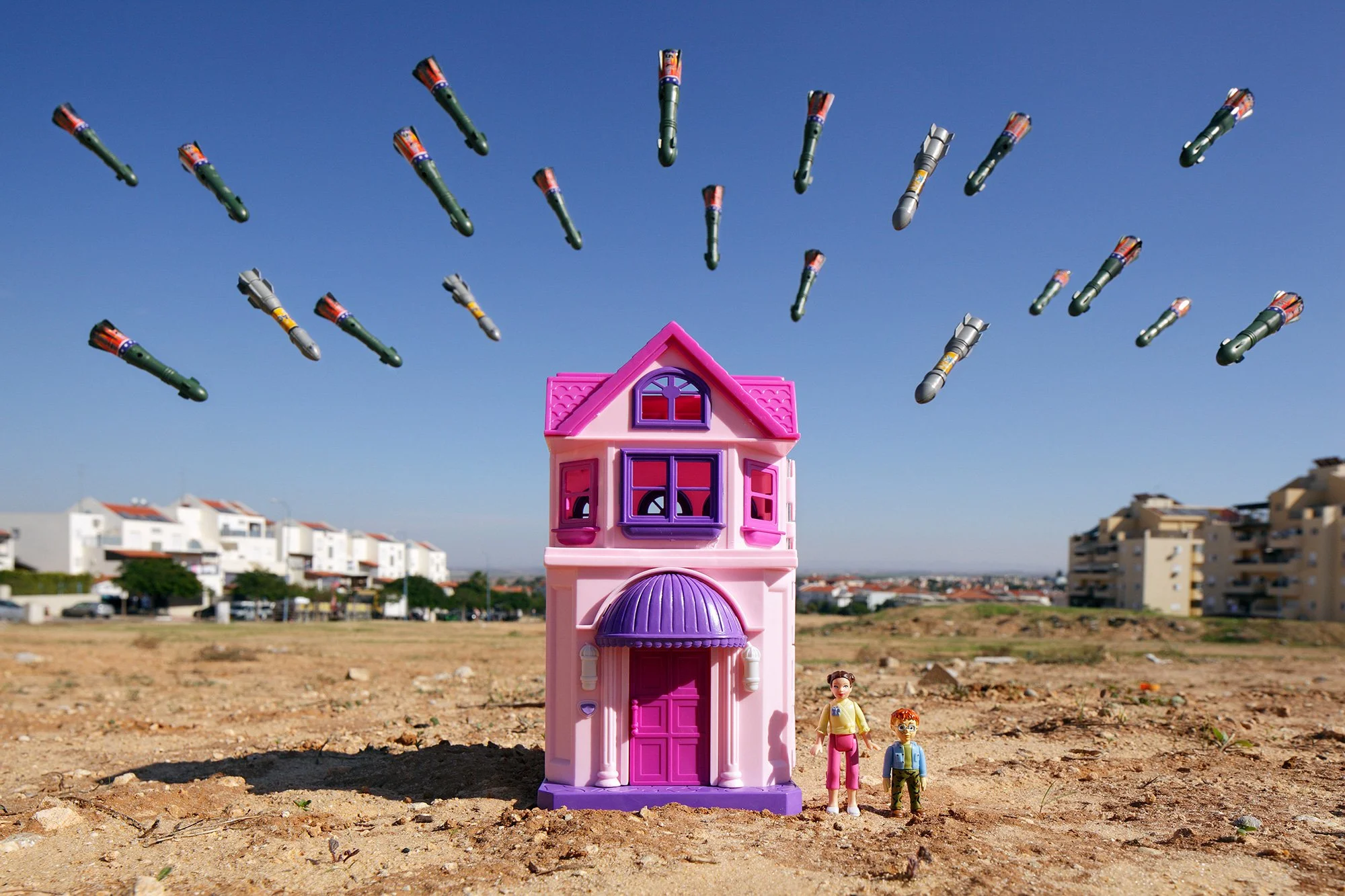
Sderot Home
Collateral: Can you tell us a little bit about yourself and what brought you to combine art and activism? What artists and activists have inspired or continue to inspire you?
Brian McCarty: My path has been a bit odd. I was born and raised in Memphis, Tennessee and found photography at a young age. Toys were a natural choice for my early, fumbling experiments with photography, and they slowly evolved into surrogates and stand-ins for real people. As a sort of self-administered play therapy, I learned to use toy characters as tools to reenact and explore real events with a degree of separation. This organic approach helped me survive some early challenges, make more sense of the world, and find my place in it.
I was fortunate to attend Parsons School of Design while some amazing documentary photographers were teaching there, including Charles Harbutt and Bruce Davidson. I credit Charles with really pushing me to develop my approach, which is rooted in exploring reality through a filter of play. My work is like a bizarre lovechild of toy and documentary photography, rooted in capturing actual moments through the lens.
From that work in school, I earned a spot at the Italian creative research center Fabrica, built by Benetton and helmed by photographer Oliviero Toscani. This was back in the heyday of United Colors of Benetton, when they were producing bold ad campaigns focused on confronting social issues. It was a unique, somewhat contradictory blend of activism, art, and commerce, and it was there that War Toys first began.
I ended up leaving Fabrica over the project. The series was intensely personal—first focused on my father’s experiences fighting in the Vietnam war, and I couldn’t reconcile giving the work to a multinational corporation. Thanks to an exploitative contract, the Benetton Group owned everything that I produced.
It took me another 14 years to pull together enough resources to restart the series on my own and grow the project into what it’s become. In that time, I worked in-house at Mattel and built a successful commercial career that funded personal projects for many years, often within the Art-Toy community.
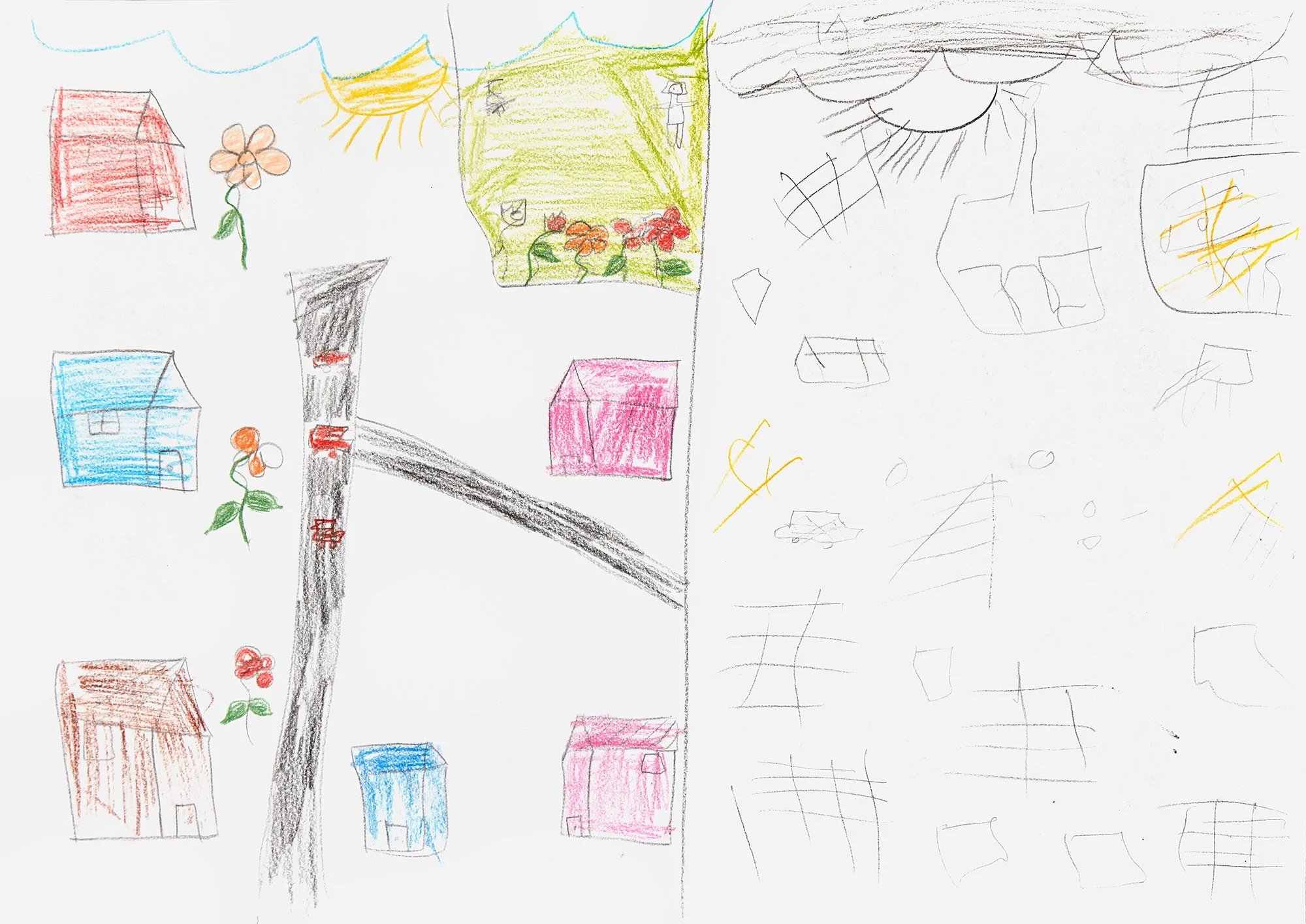
Burning Neighborhood
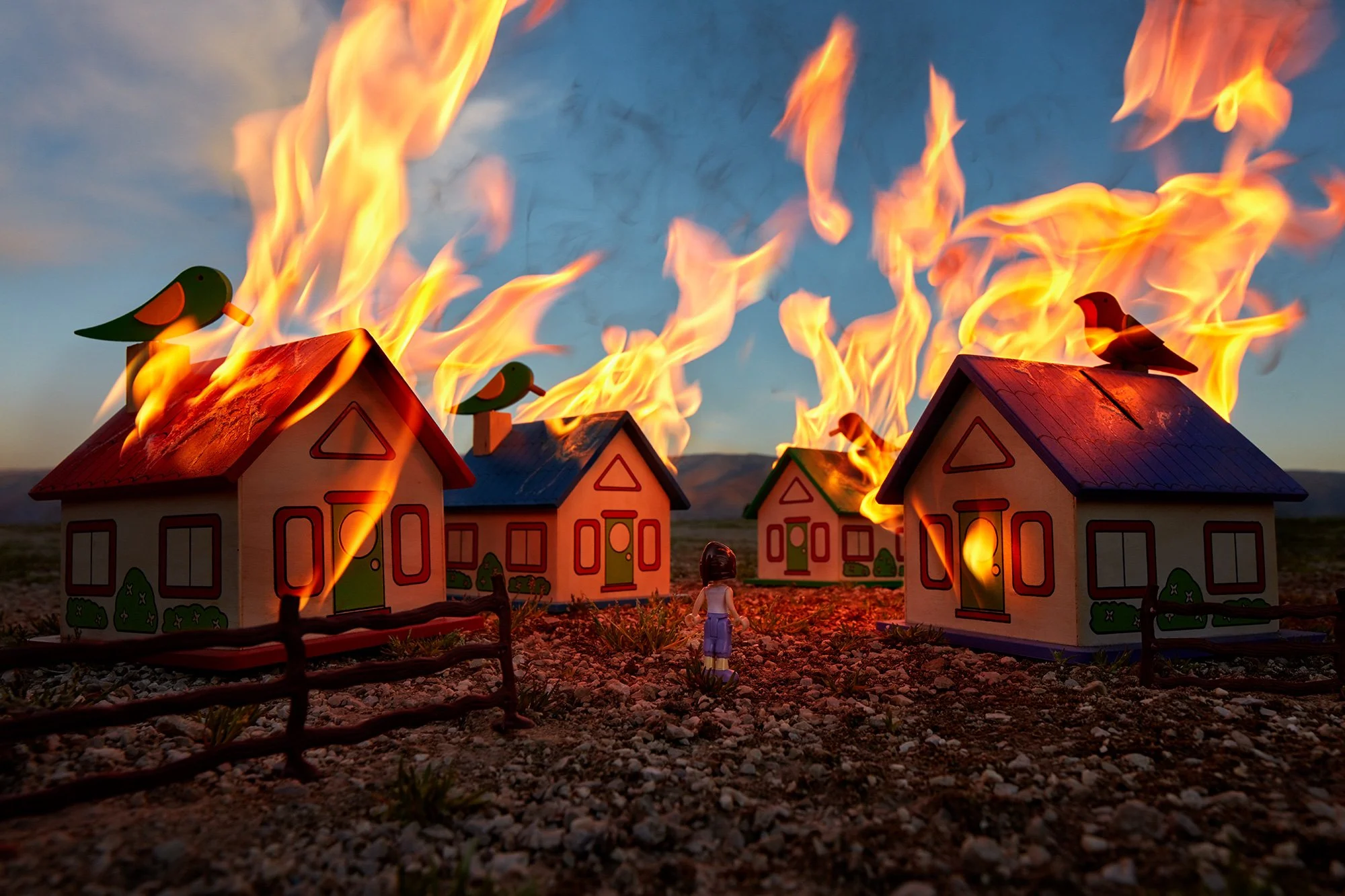
Burning Neighborhood
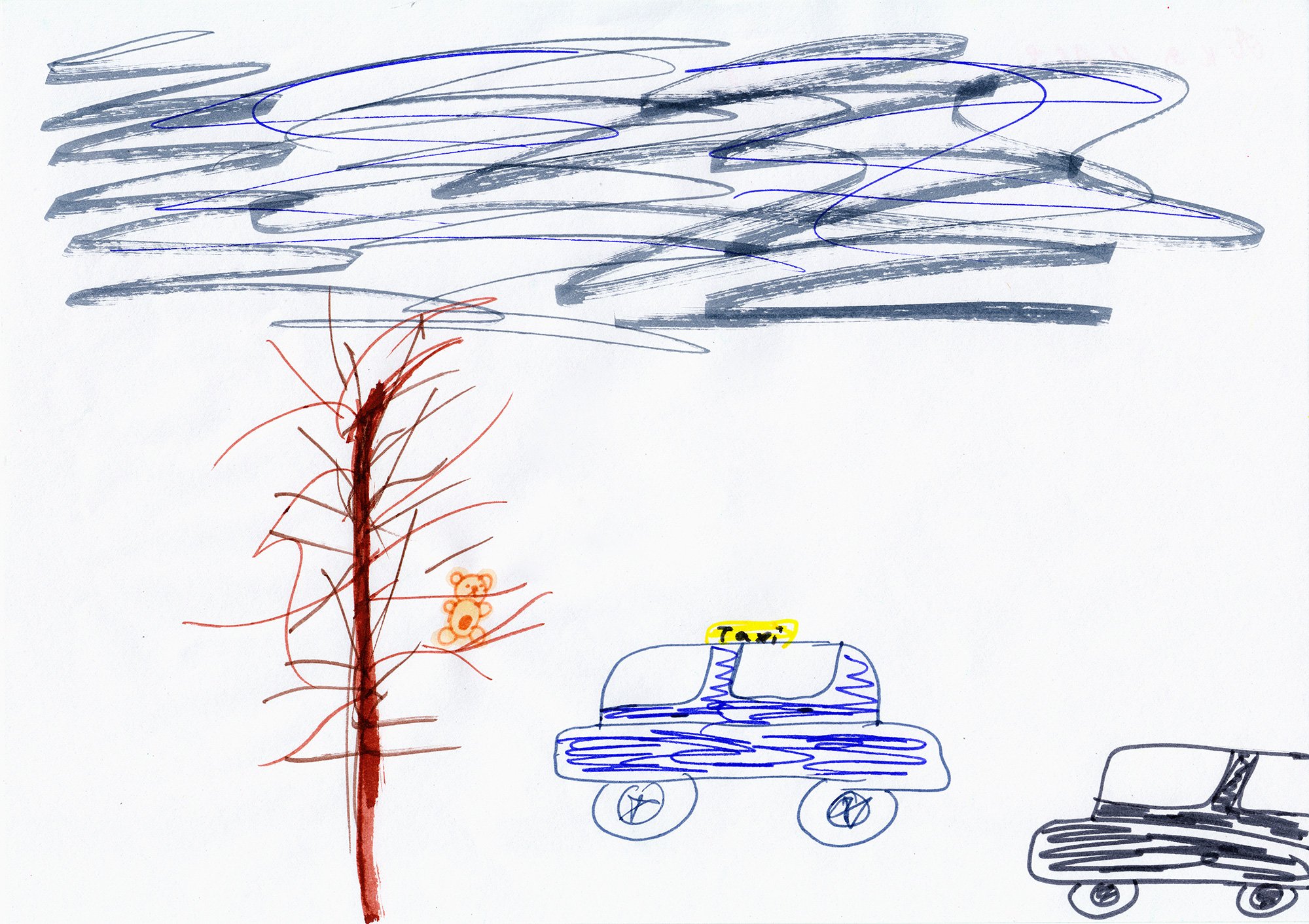
Stuffed Bear in Tree
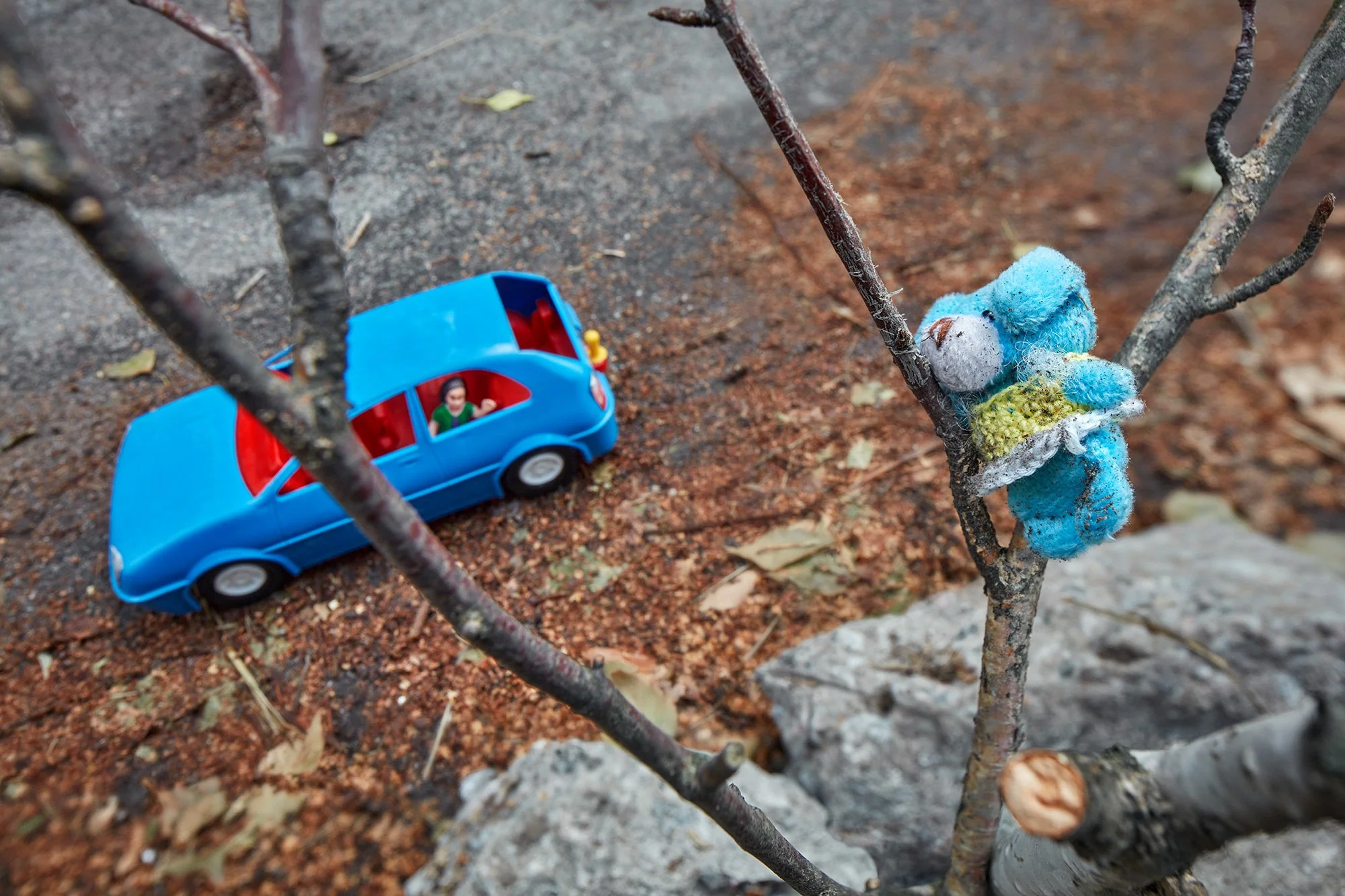
Stuffed Bear in Tree
Collateral: Could you tell us more about War Toys and its art-therapy for children? How does art aid in processing trauma, especially for children? What is the emotional impact on you when you translate the children’s art photographically?
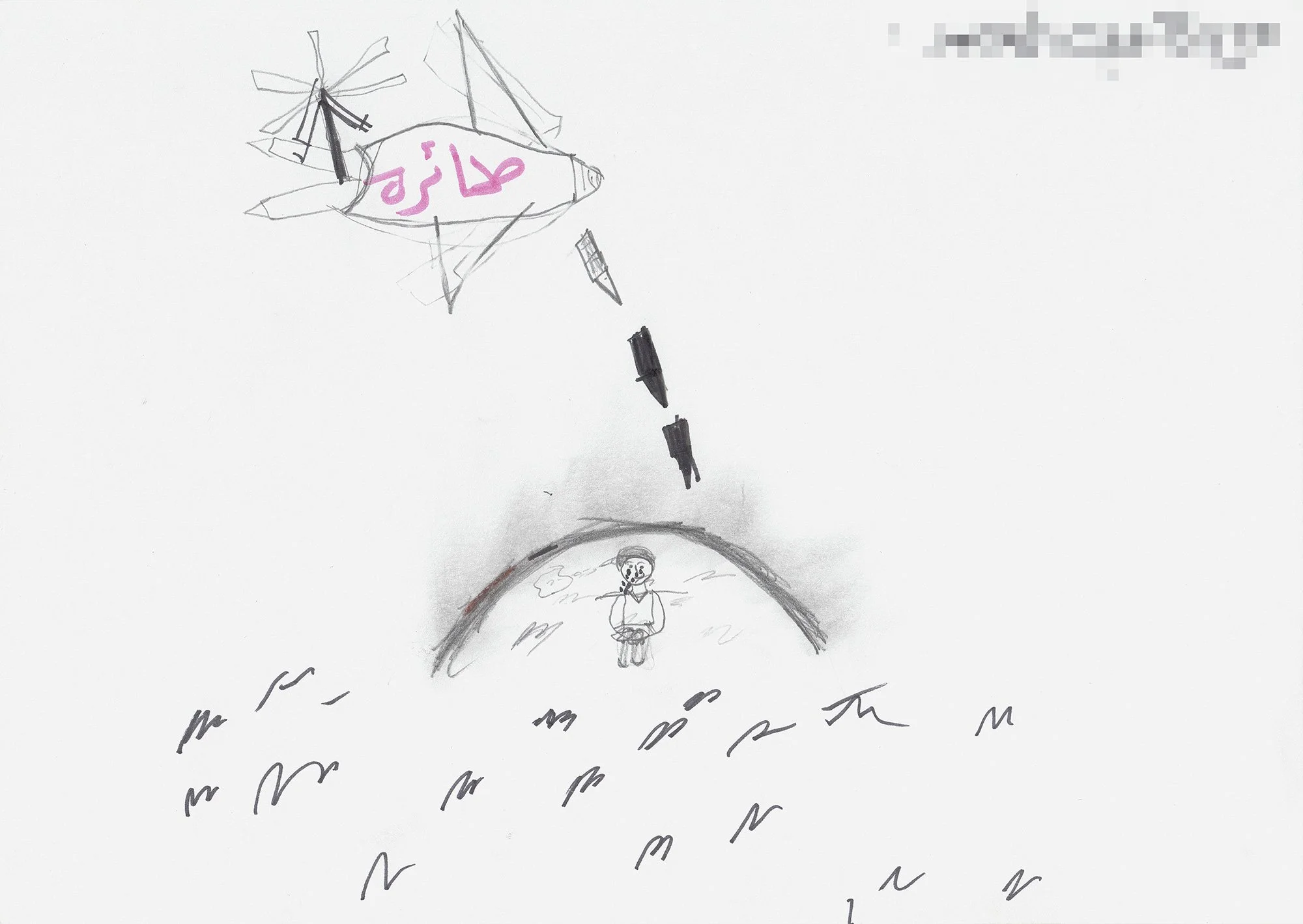
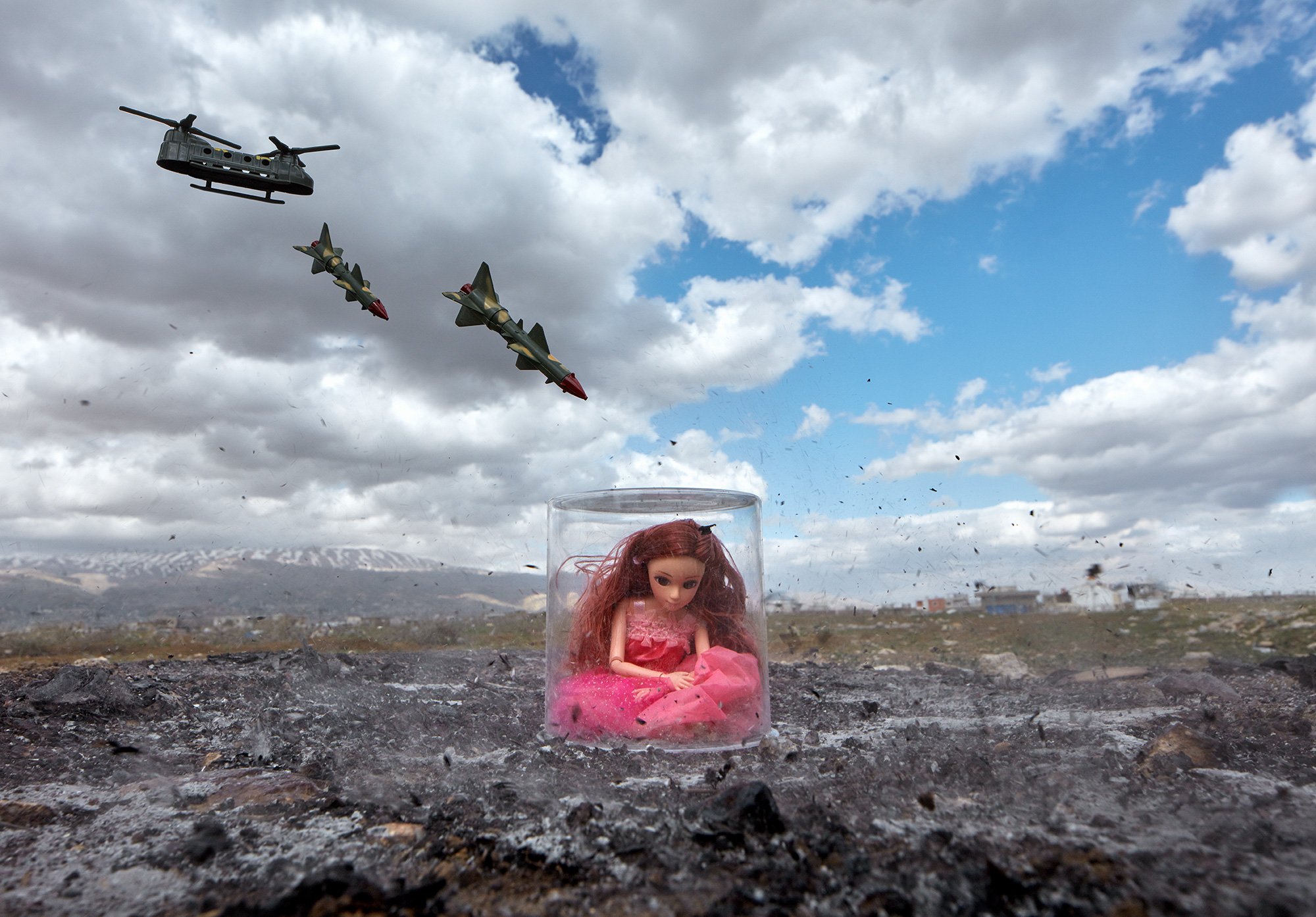
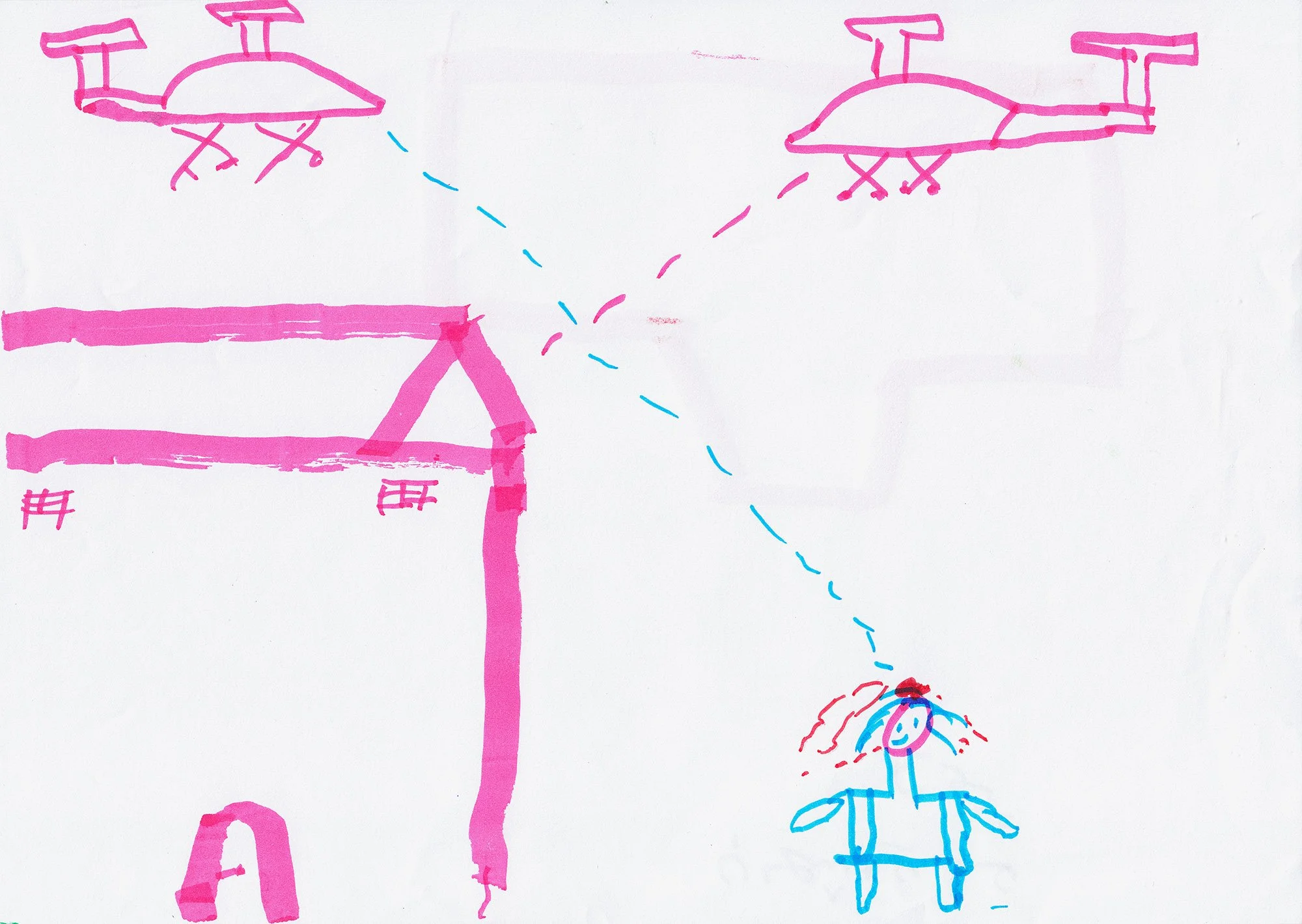
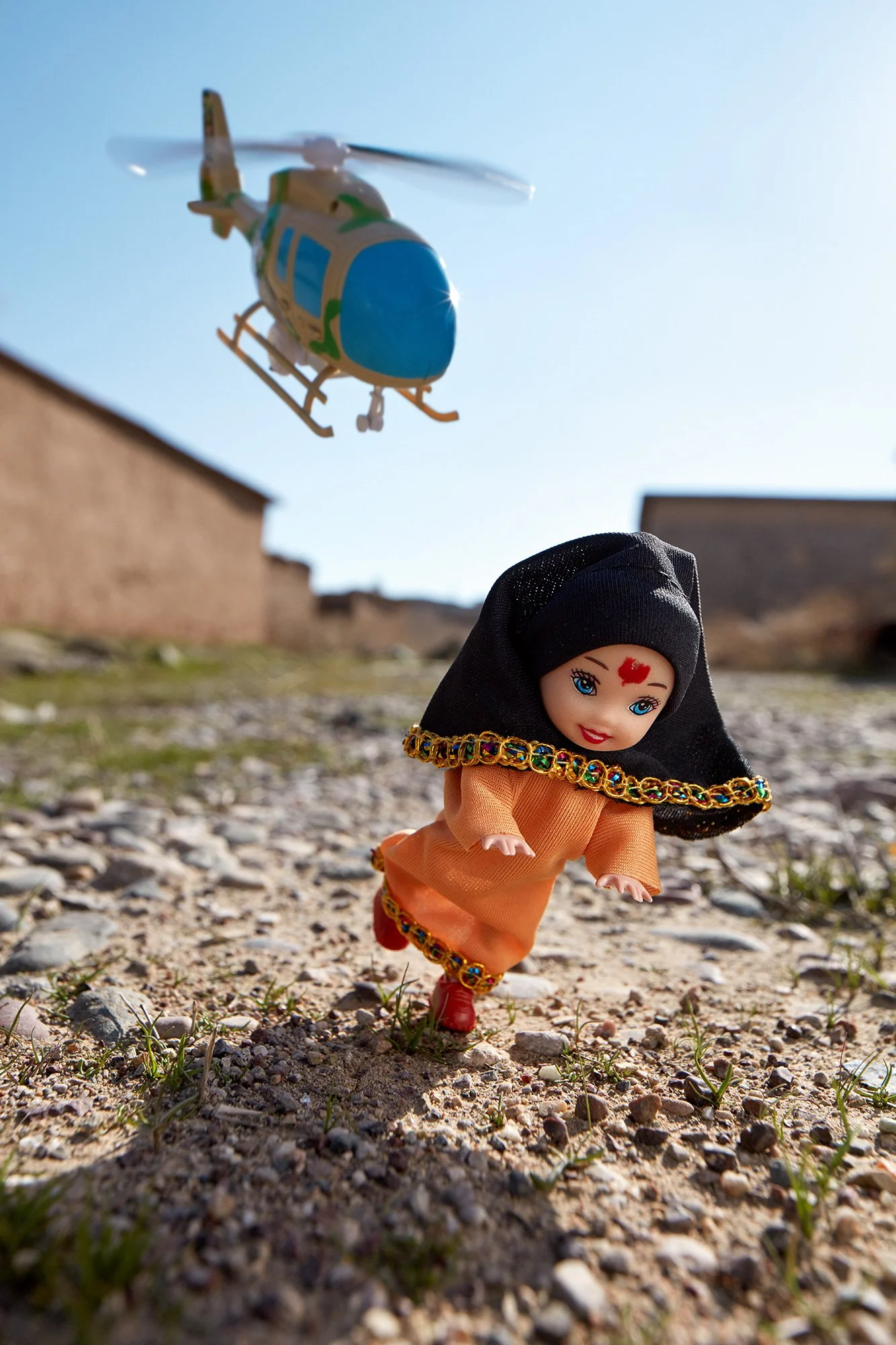
Brian McCarty: Art therapy is at the core of the War Toys photo series. I travel with or recruit local therapists to conduct art-based interviews with small groups of children who have been affected and often displaced by war. Although the interviews are based in art therapy and closely resemble therapeutic group sessions, we are careful to point out that we are not providing therapy to these kids. Actual art therapy is never intended to be shared publicly, and it takes more than the one or two sessions we’re able to provide to make a lasting impact. Knowing this, we take special care to inform the children and their caregivers how the drawn accounts will be used and seen by the world.
Our main motivation is safely and ethically collecting the children’s stories, yet the impact on them is miraculous to see. Even from just one 90-minute session, the effects are apparent. Kids who are quiet and closed off become more energetic and engaged with their peers, and others who are prone to acting out and expressing themselves through aggression become calmer and better able to articulate their feelings. In many places, the therapist we provide is the only one that these kids will ever see. Understandably, psychosocial support takes a backseat to immediate, life-sustaining needs like water and shelter, but without help, many of these children will be plagued with lasting psychological effects. A traumatized child easily becomes an angry adult, fueling cycles of violence, domestic and otherwise.
As for the emotional impact on me, these stories can be a lot to carry. To recreate them, I have to fully understand and absorb as much as I can, so the third-party trauma is a bit extreme at times. Combined with my own firsthand experiences of war, and well… there’s a reason I’ve hit pause on the fieldwork since Ukraine. I may have finally hit my limit after five wars, although I’m hoping not. There are so many stories that need to be told.
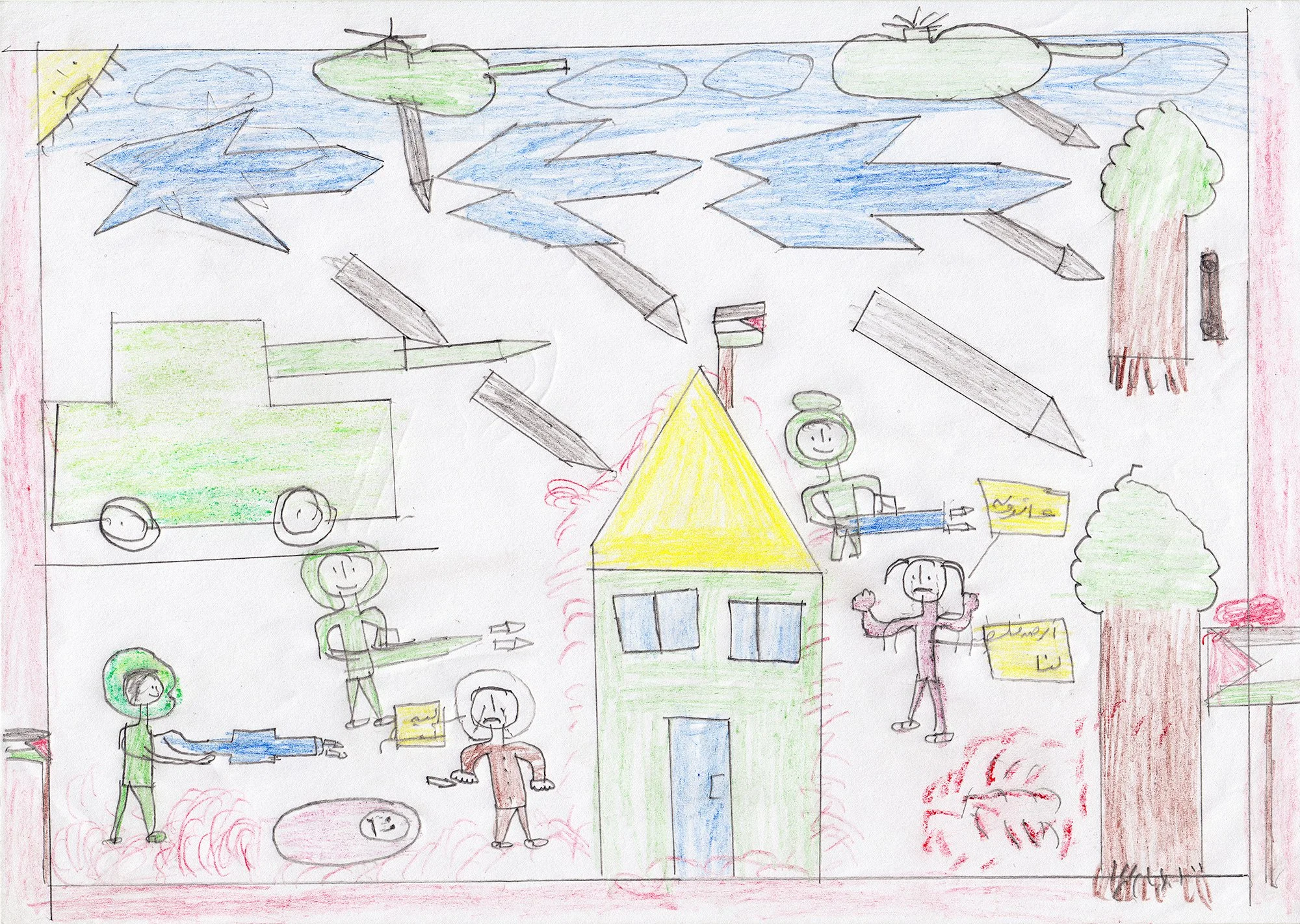
Gaza Cinderella
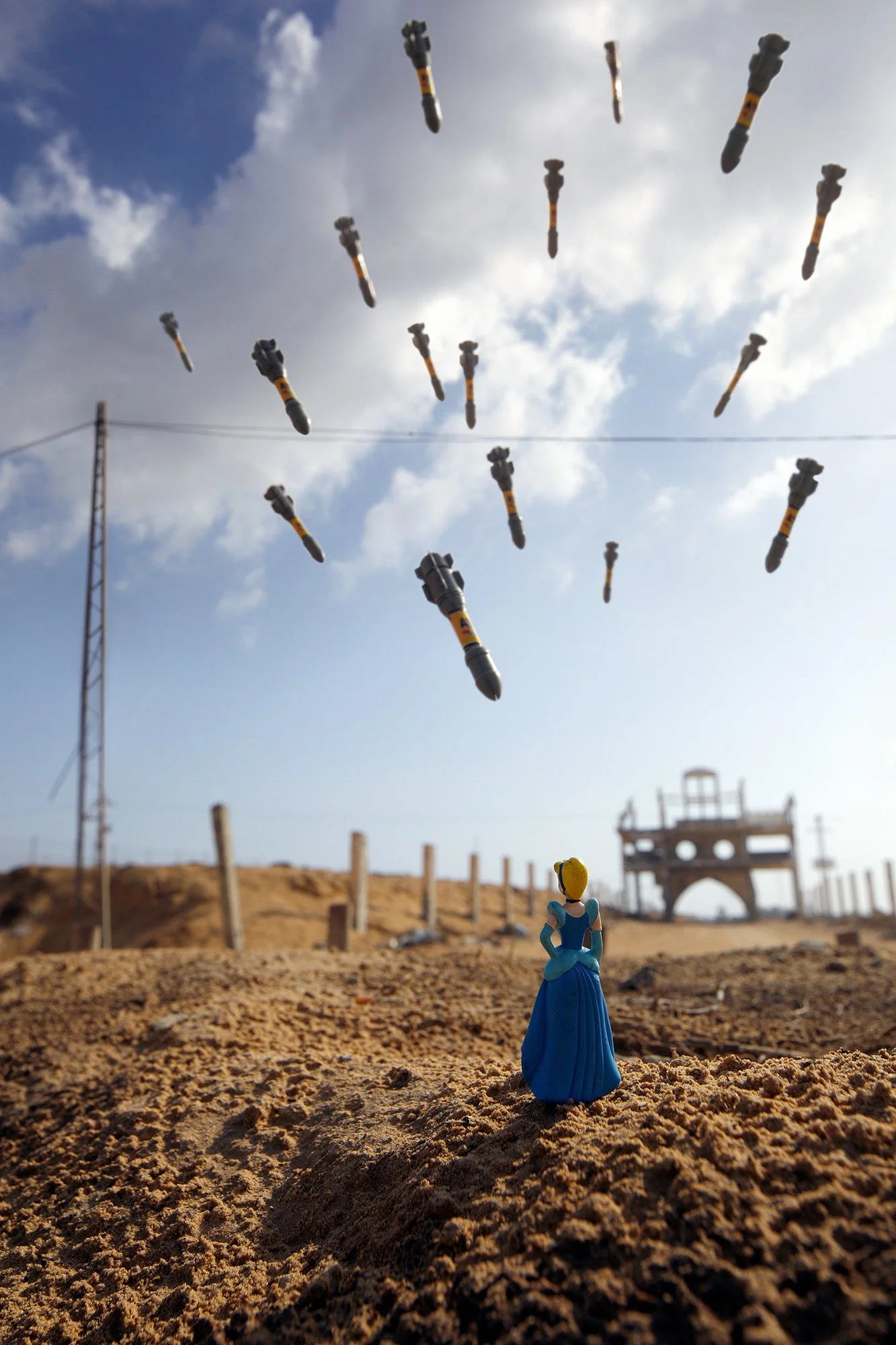
Gaza Cinderella
Survivor Alone
Survivor Alone
Collateral: What advice do you have for creating art during or in response to conflict?
Brian McCarty: My simple advice is to be creative and get those feelings out—transform your trauma into creative expression. I’m reminded of a t-shirt I saw recently that said, “Don’t use AI to create art. Use childhood trauma like a real artist.” It’s funny because it’s true. Creativity is often fueled by past traumas, by trying to find some level of peace and understanding for the things that hurt us. Some events, some feelings are too big or too complicated to process through words. Art can bridge that gap and provide enough distance from an event to see it more clearly.
Gunned Down
Gunned Down
Collateral: What inspired you to re-imagine “Army men” figures?
Brian McCarty: Sourcing toy-props for the War Toys photo series, I kept finding the EXACT same cheap generic toys everywhere, from Beirut to Baltimore. It showed me that there are relatively few manufacturers serving the lowest levels of the market. They reach millions of kids who could never afford a Barbie or LEGO set, but no one is investing in new and better designs. There’s no money to be made in cheap toys, so these kids get the same problematic army men and knockoff fashion dolls that have been sold for decades, increasing disparity and denying these kids the same quality of play as their more privileged peers. I saw a golden opportunity to make a huge difference by simply giving those toymakers better designs and subsidizing their production costs. Kids get economically accessible toys that better support their development, and manufacturers get an edge on their competition with updated products. Everybody wins.
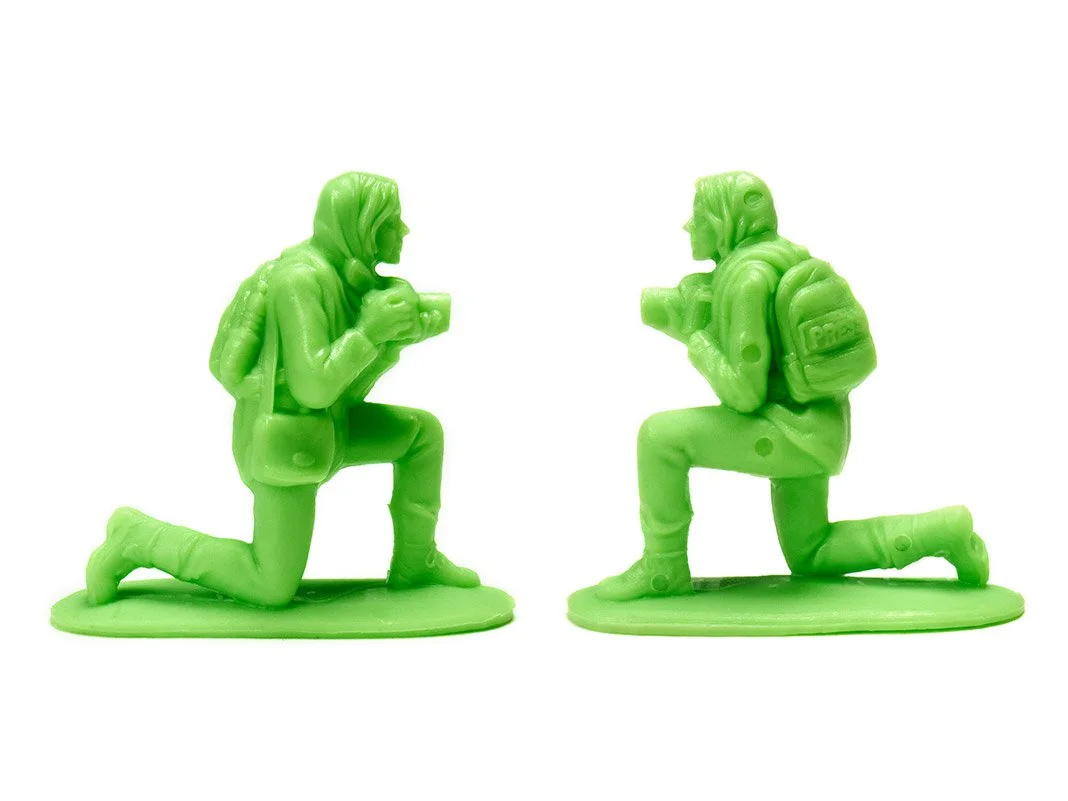
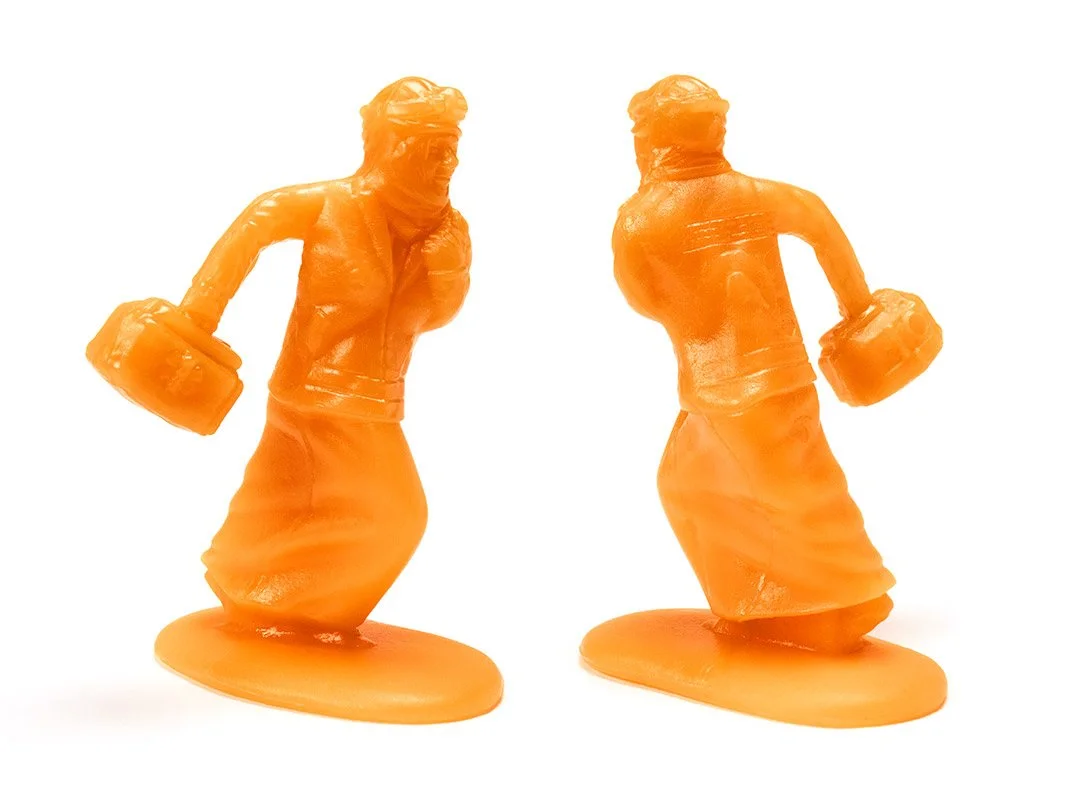
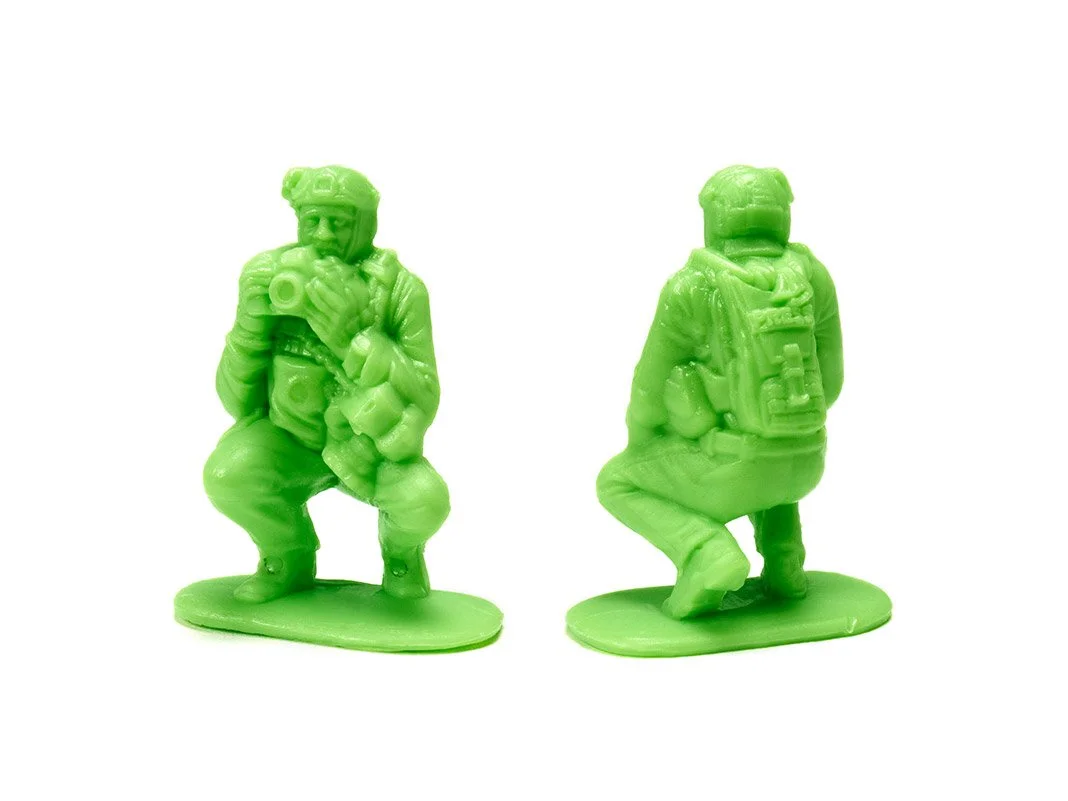
The pilot and proof of concept is adding photojournalists, aid workers, and rescuers to military playsets that are still sold worldwide. Since kids won’t have any idea what these noncombatants actually do, we created an educational boardgame that can be distributed in military playsets for just 13¢. The game is supported by a free mobile app, and it has been released in 41 languages to far, thanks to a partnership with Translators Without Borders / Clear Global.
Because there is so little investment in cheap generic toys, the changes we’re fostering will stay in the market for generations. The goal is to give millions of kids more play options than “us versus them” while encouraging a very different type of war play—as humanitarian heroes working together to save civilians.
Collateral: What other organizations has War Toys partnered with? What has been your global footprint since creating your non-profit?
Brian McCarty: War Toys has worked with organizations including Terre des Hommes (TdH) Italia, UNICEF, IOM / UN Migration Agency, Kayany Foundation, Spafford Children’s Center, Syrian Civil Defense / White Helmets, All-Ukrainian Art Therapy Association, UNRWA, ICC, Israel Trauma Coalition, and the Mid-America Art Alliance. I’m proud that our work has been used in exhibitions, installations, and advocacy campaigns in the US, France, Italy, Hong Kong, UK, South Africa, Iraq, Lebanon, Belgium, and Germany. Media coverage has reached an additional 20 countries, sharing children’s accounts of war everywhere from Korea to Peru.
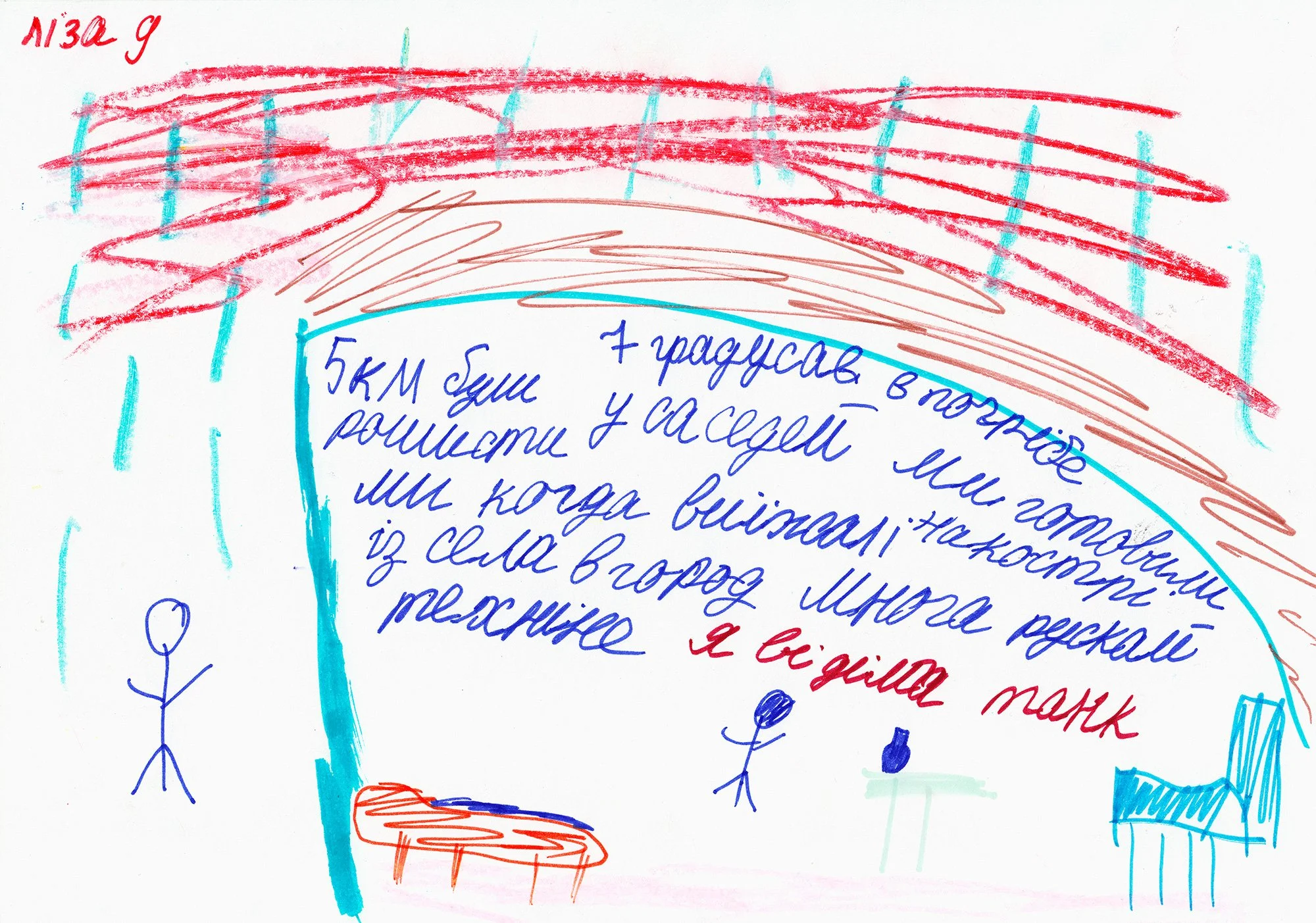
I Saw a Tank
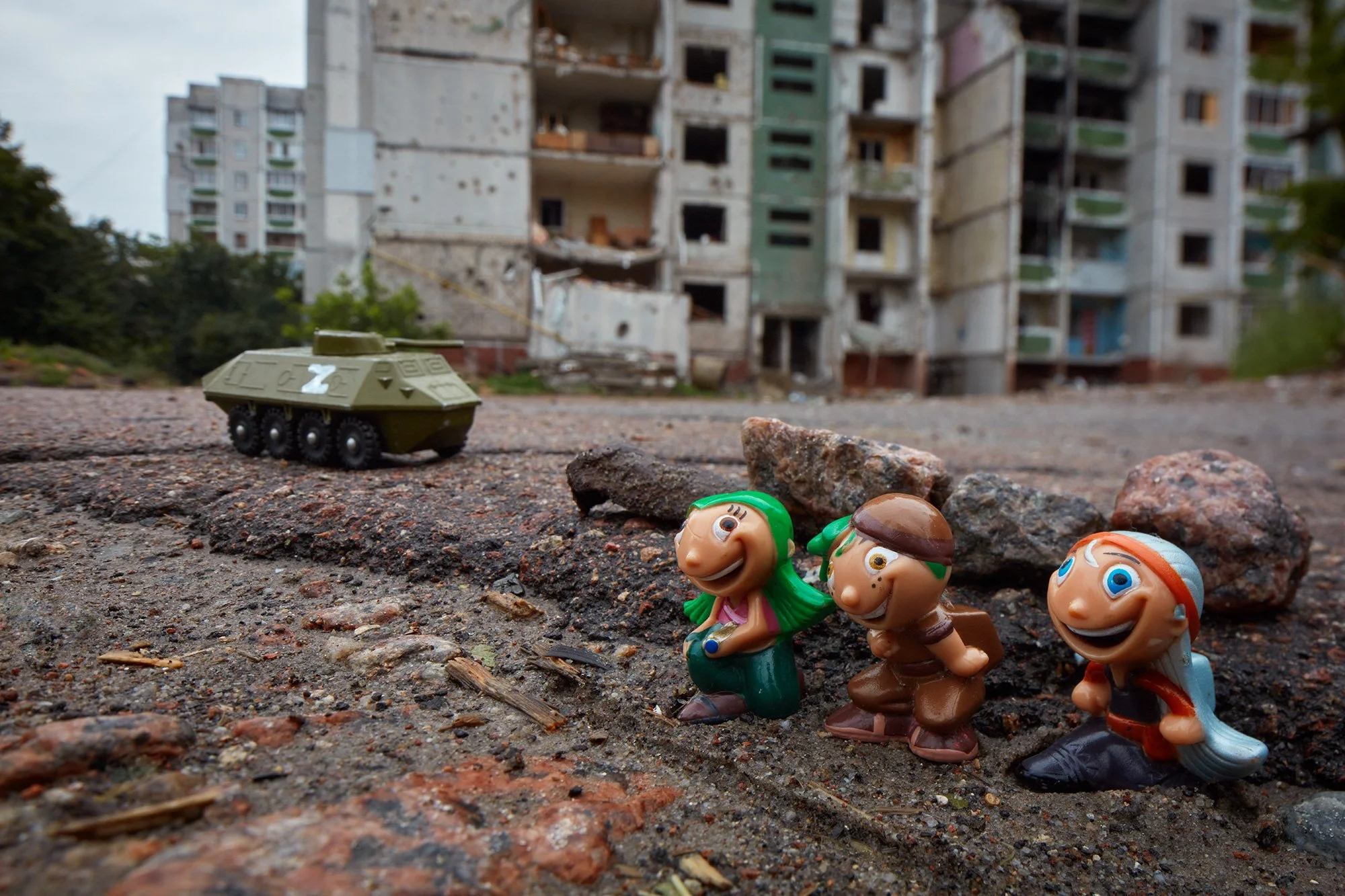
I Saw a Tank
Collateral: What is the most important thing you want people to take away from War Toys and from your photography?
Brian McCarty: More than anything, I hope to build more empathy and understanding for people who are affected by war. As part of that, by presenting the children’s accounts of war through a common filter (and not showing their faces), I want to sidestep the blatant racism and xenophobia that keeps many people from seeing that all war-affected kids are human and equally deserving of care.
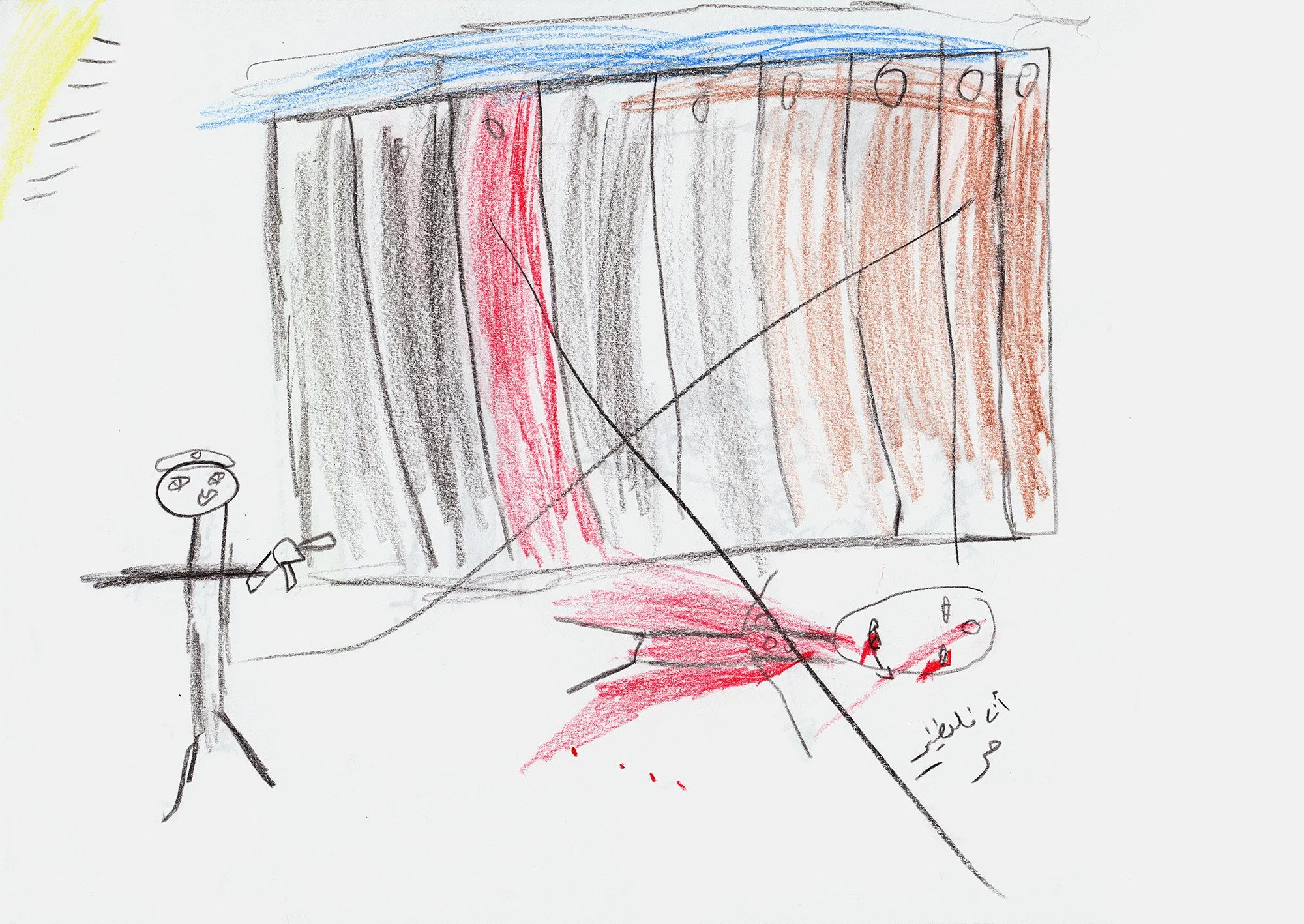
Wall Shooting
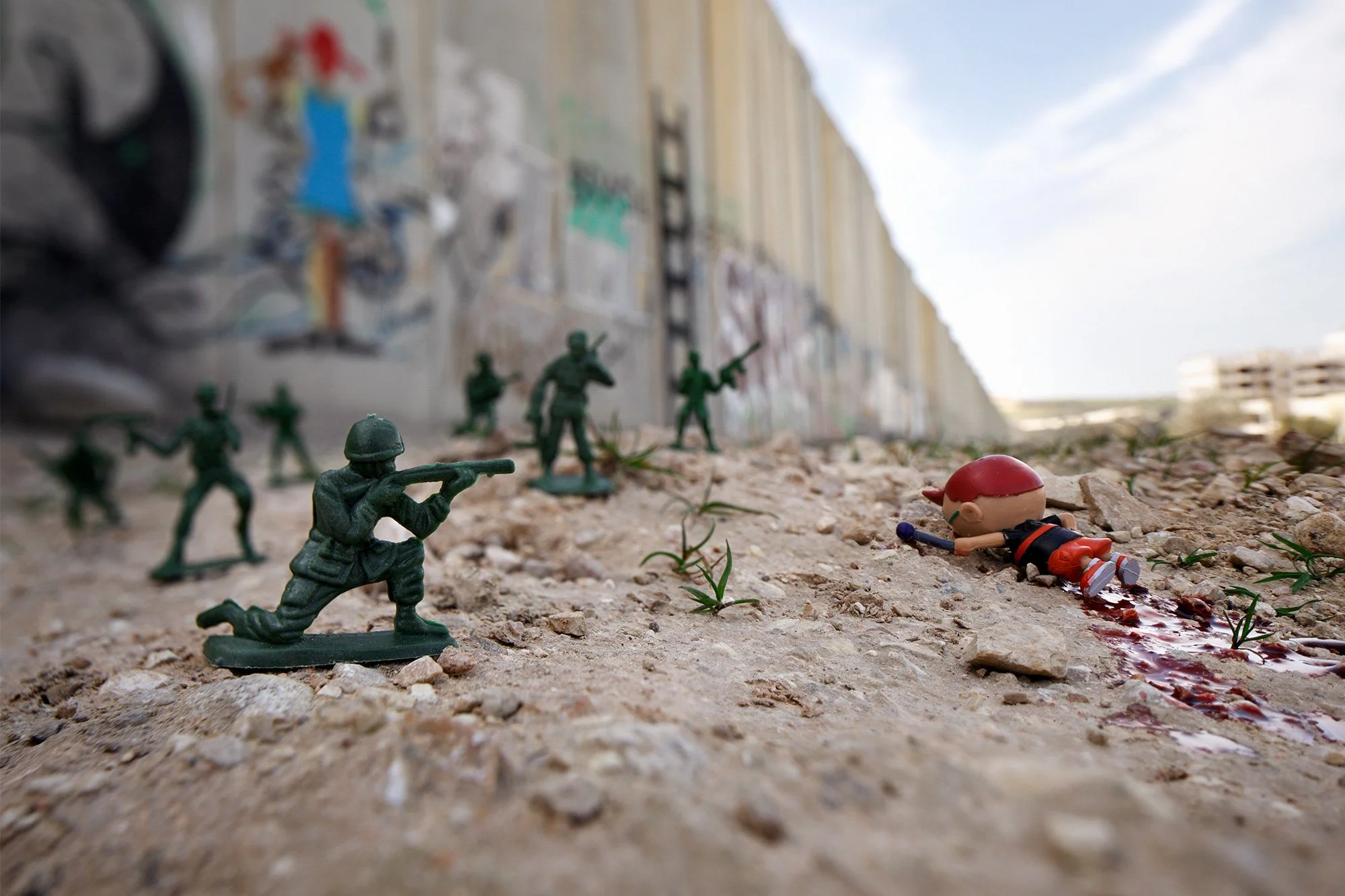
Wall Shooting
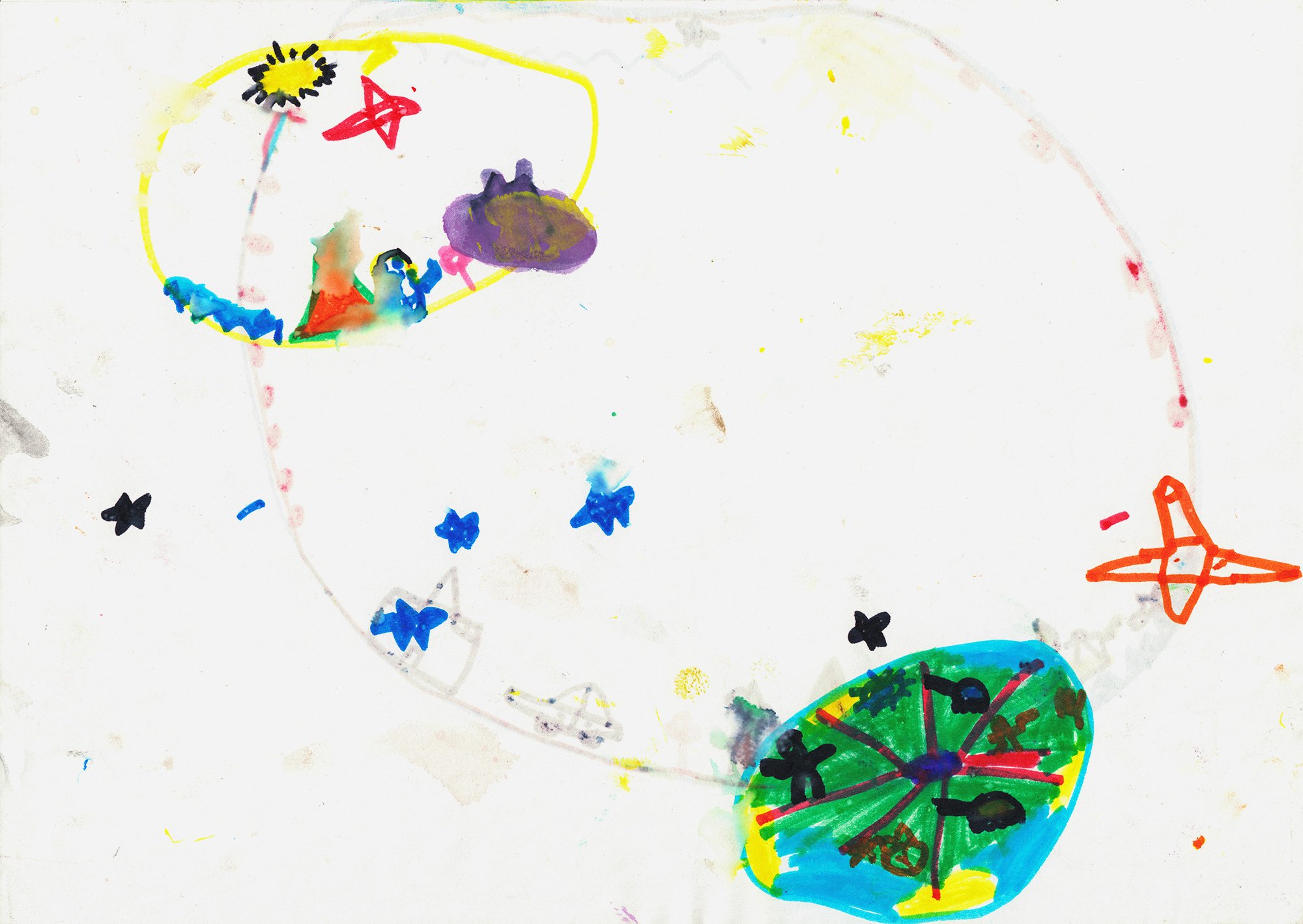
Hope to Leave World of War
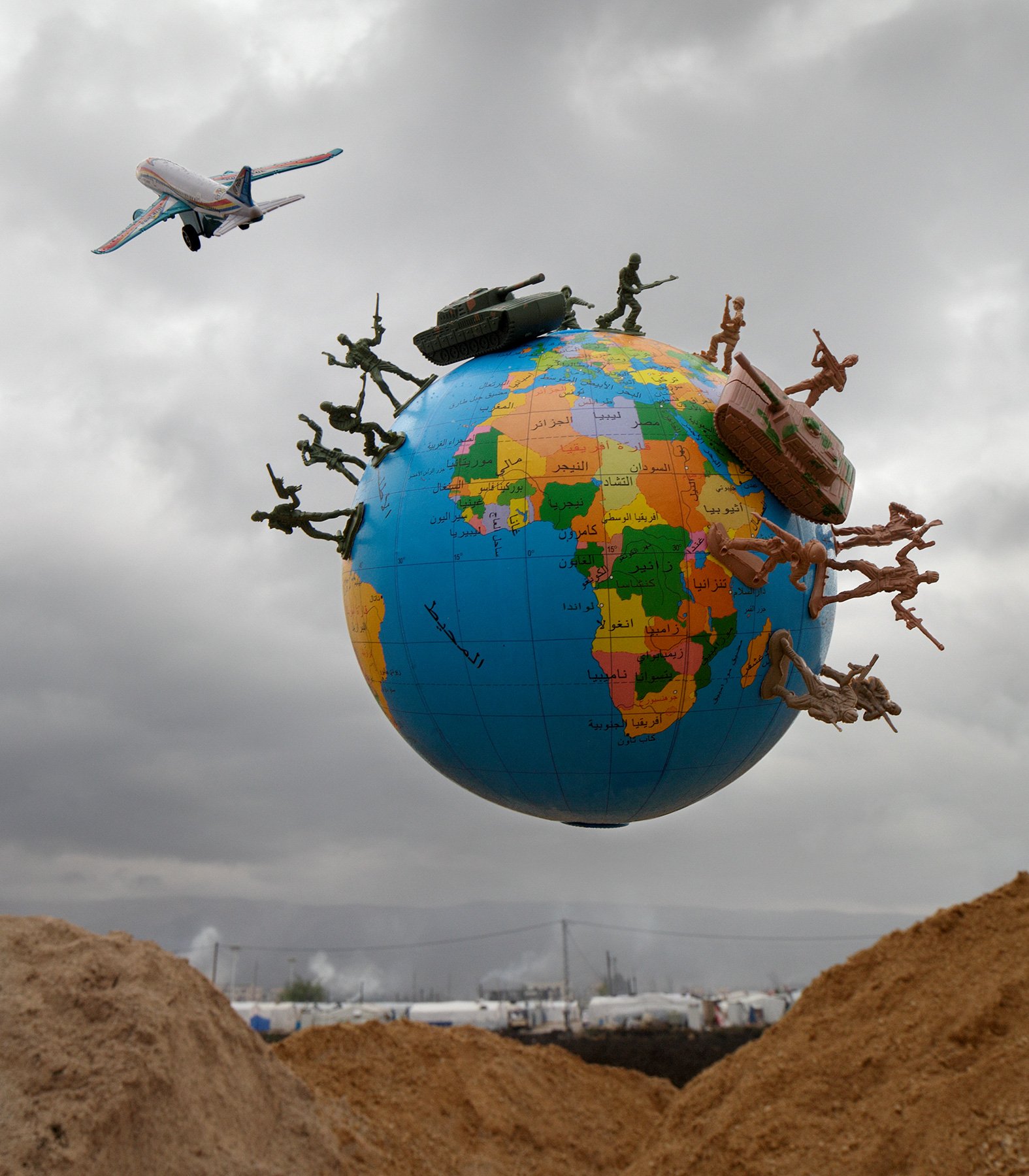
Hope to Leave World of War
Collateral: What plans or hopes do you have for the future of War Toys?
Brian McCarty: War Toys is still a small organization, but we have big dreams and a solid foundation to build upon. Advocating for war-affected children will always be a cornerstone of our work, but the toy industry program is where I see the most potential for us to make a lasting impact. My goal is to build a nonprofit toy company of sorts and bridge the massive play gap for millions upon millions of kids who could never afford name-brand toys. As part of that, we intend to support toy research outside of Western markets. Since the toy industry funds most toy research, disadvantaged regions have been largely ignored. There’s not enough money to be made for them to justify the investment. I want to take money out of the equation and focus on toys and play as a common human experience. There are huge gaps in our collective knowledge that need to be filled, and the War Toys nonprofit organization is uniquely positioned to do it.
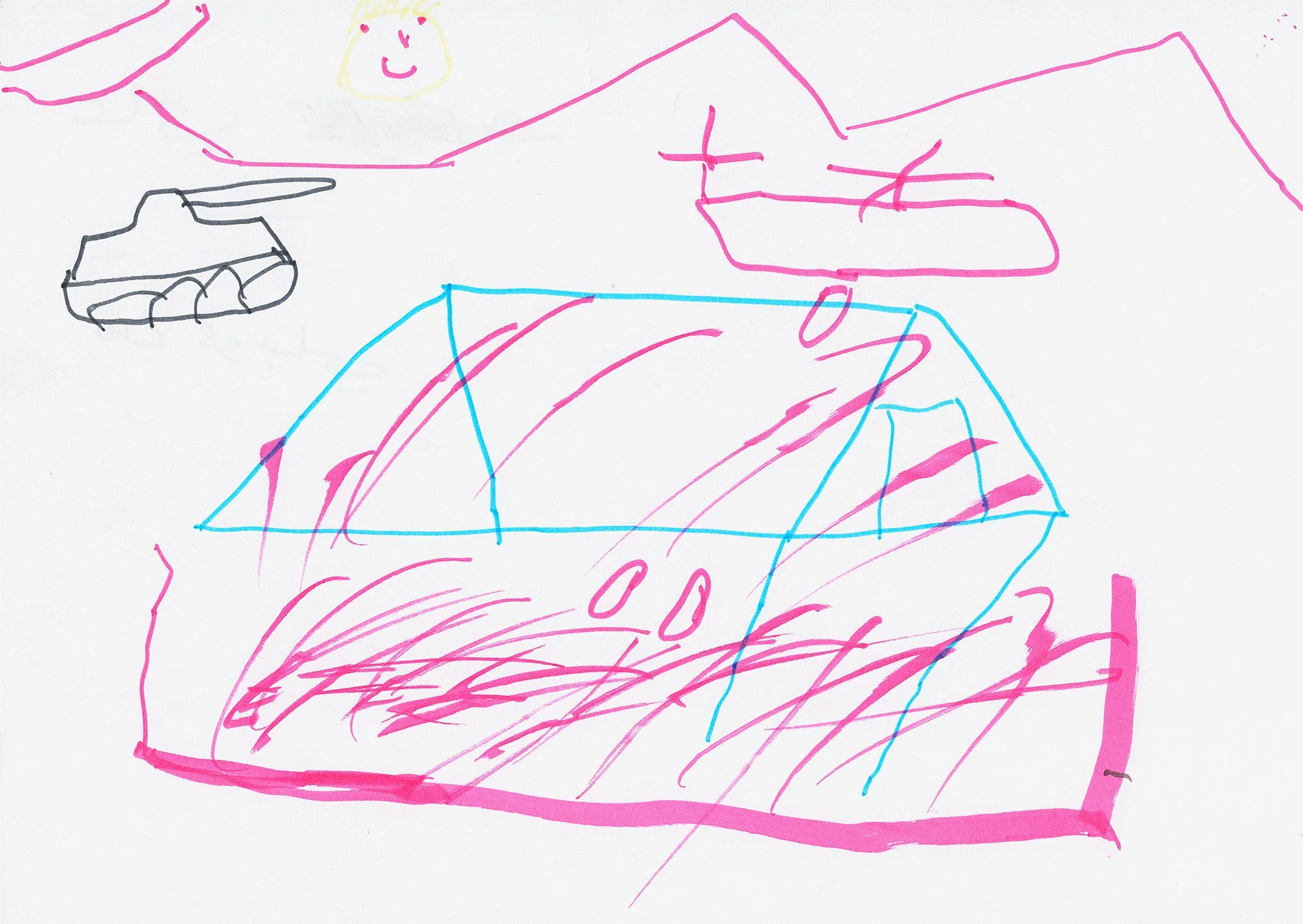
Left Home
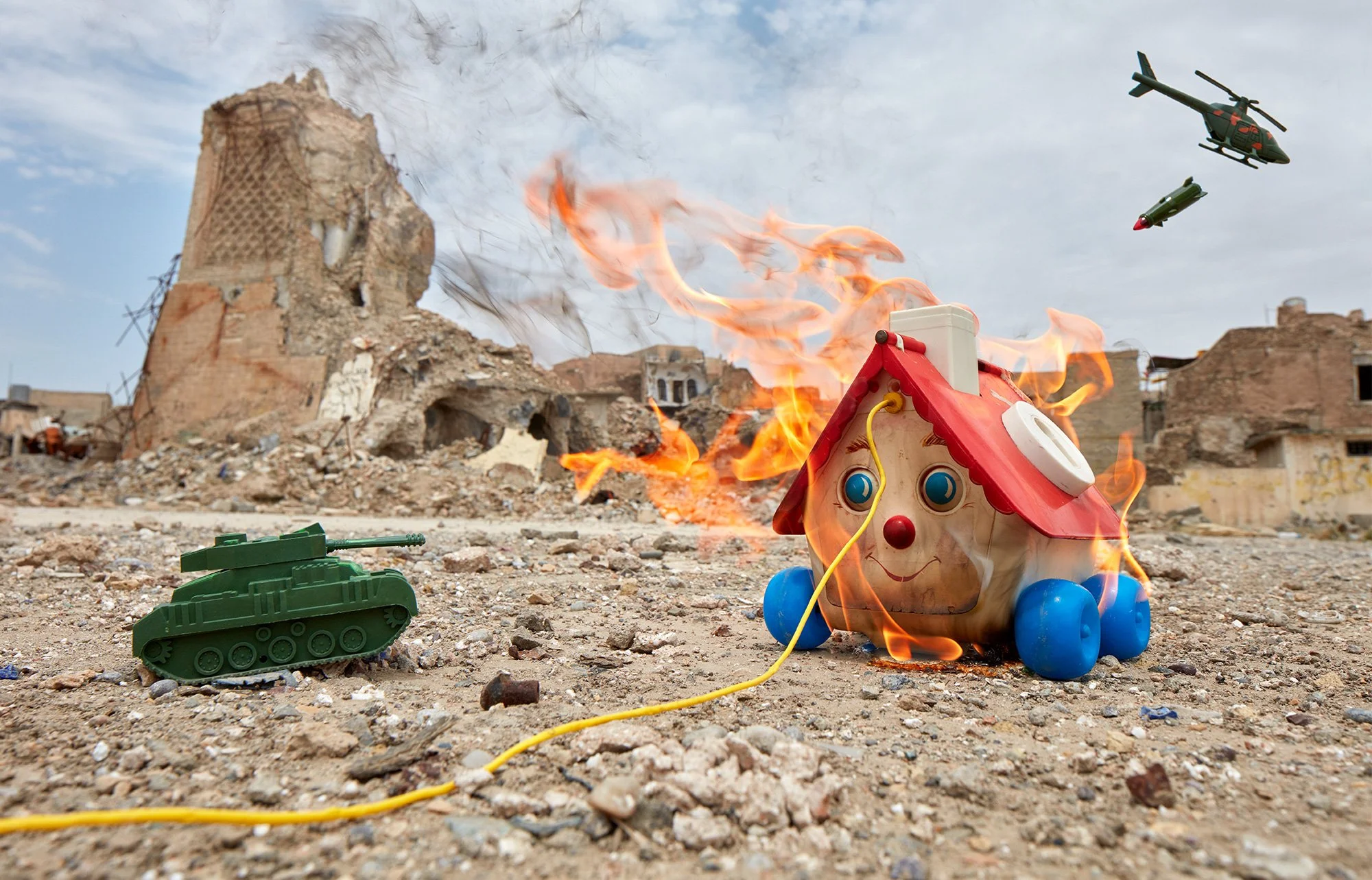
Left Home
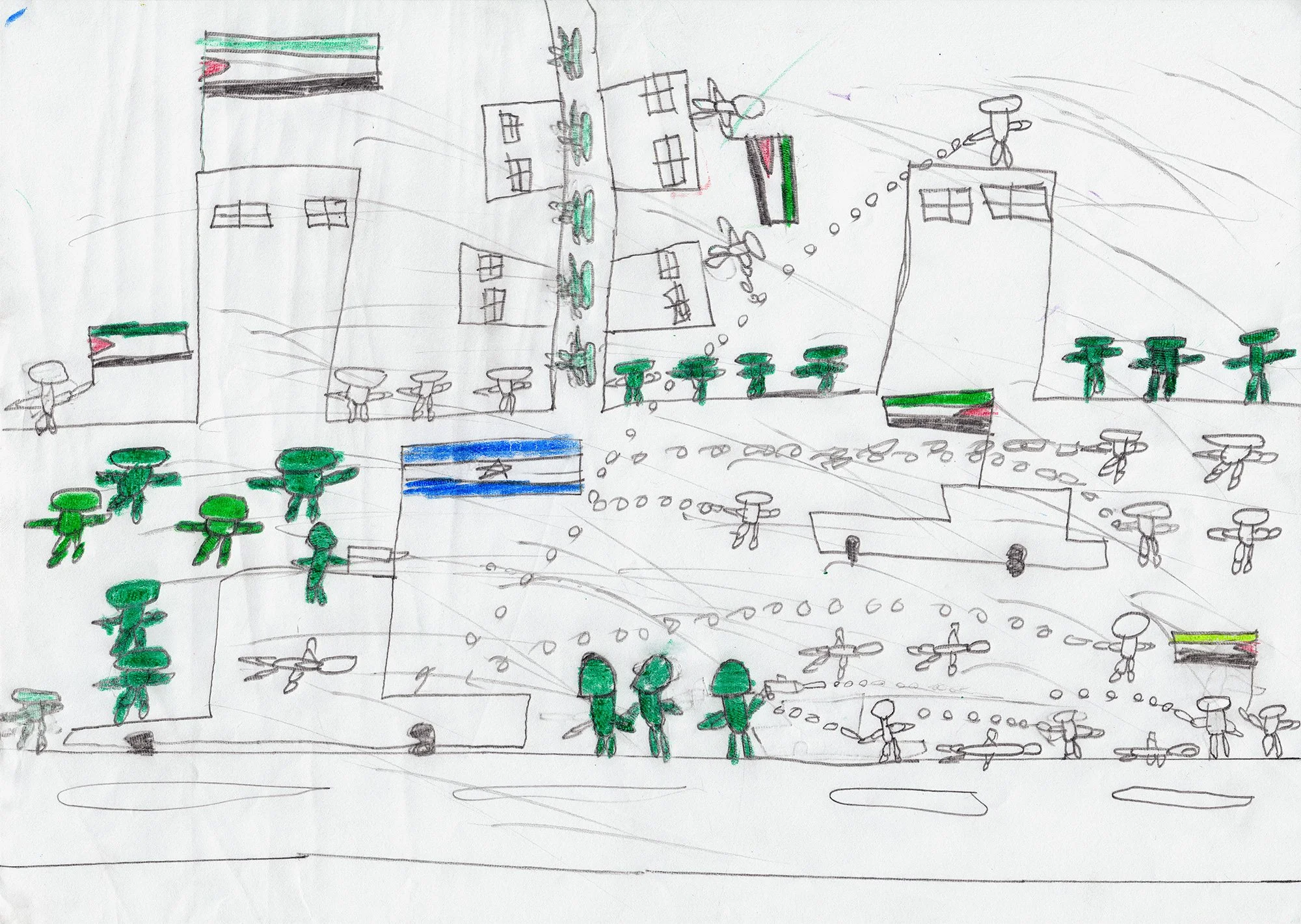
Youth Resistance
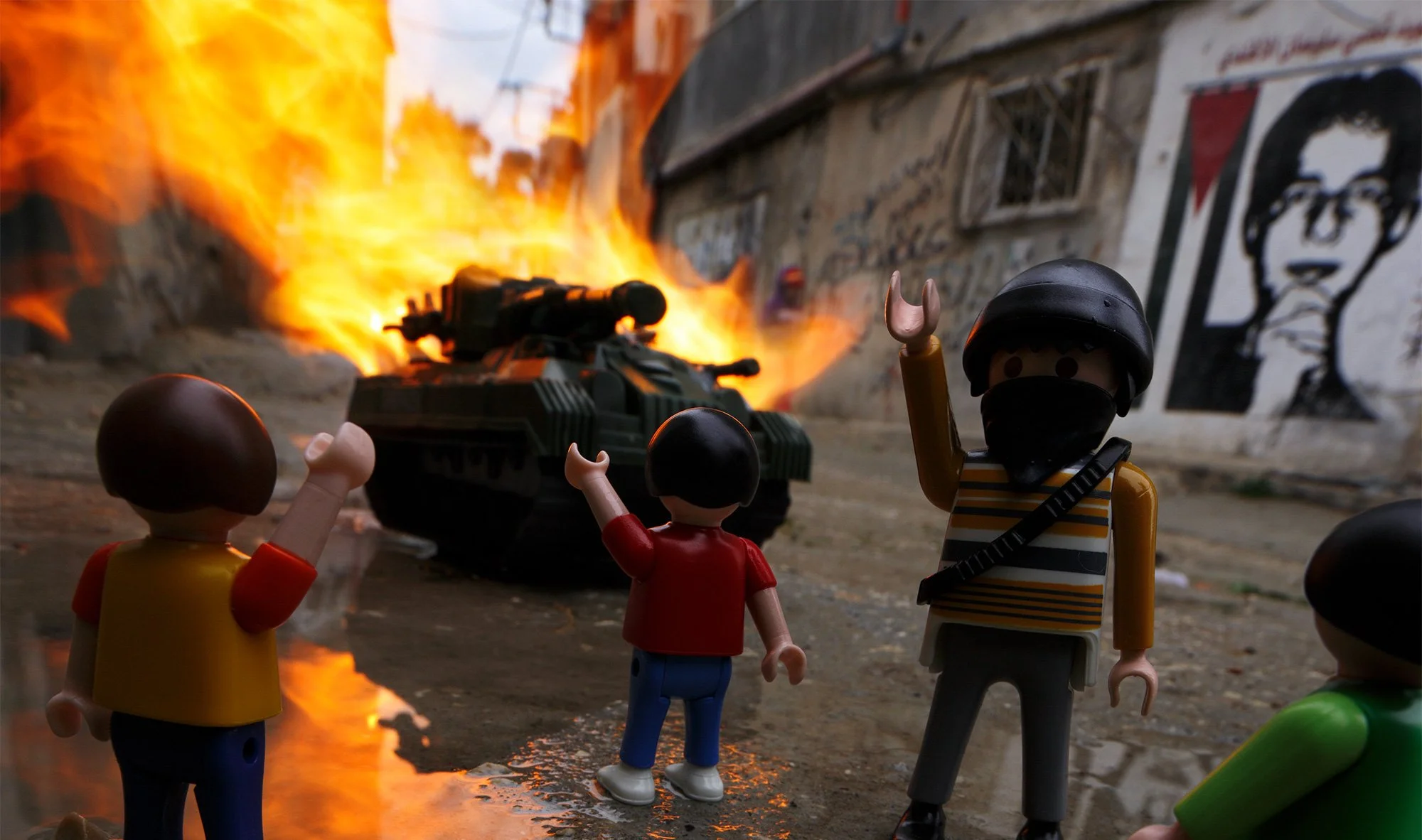
Youth Resistance
Collateral: Where can we find more of your work and the work created through the organization?
Brian McCarty: I invite folks to visit wartoys.org to learn more about our work. The website includes a gallery with examples of our art-therapy-based collaborations with children from Ukraine, Iraq, Syria, Israel, Lebanon, the West Bank, and Gaza Strip. There’s also a collection of recent press that will give folks an in-depth look at the development of the organization and our programs.
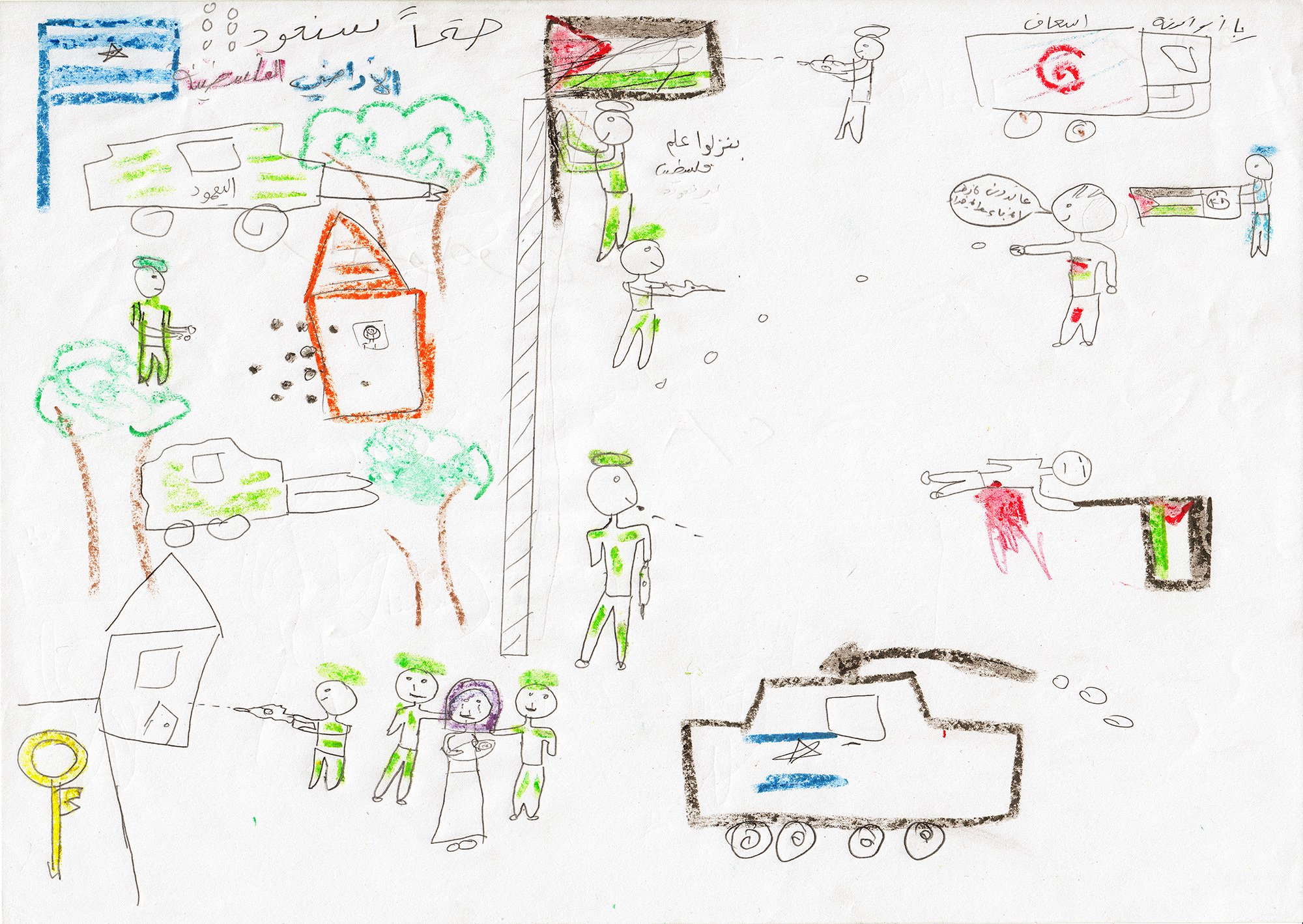
Mother of Violence
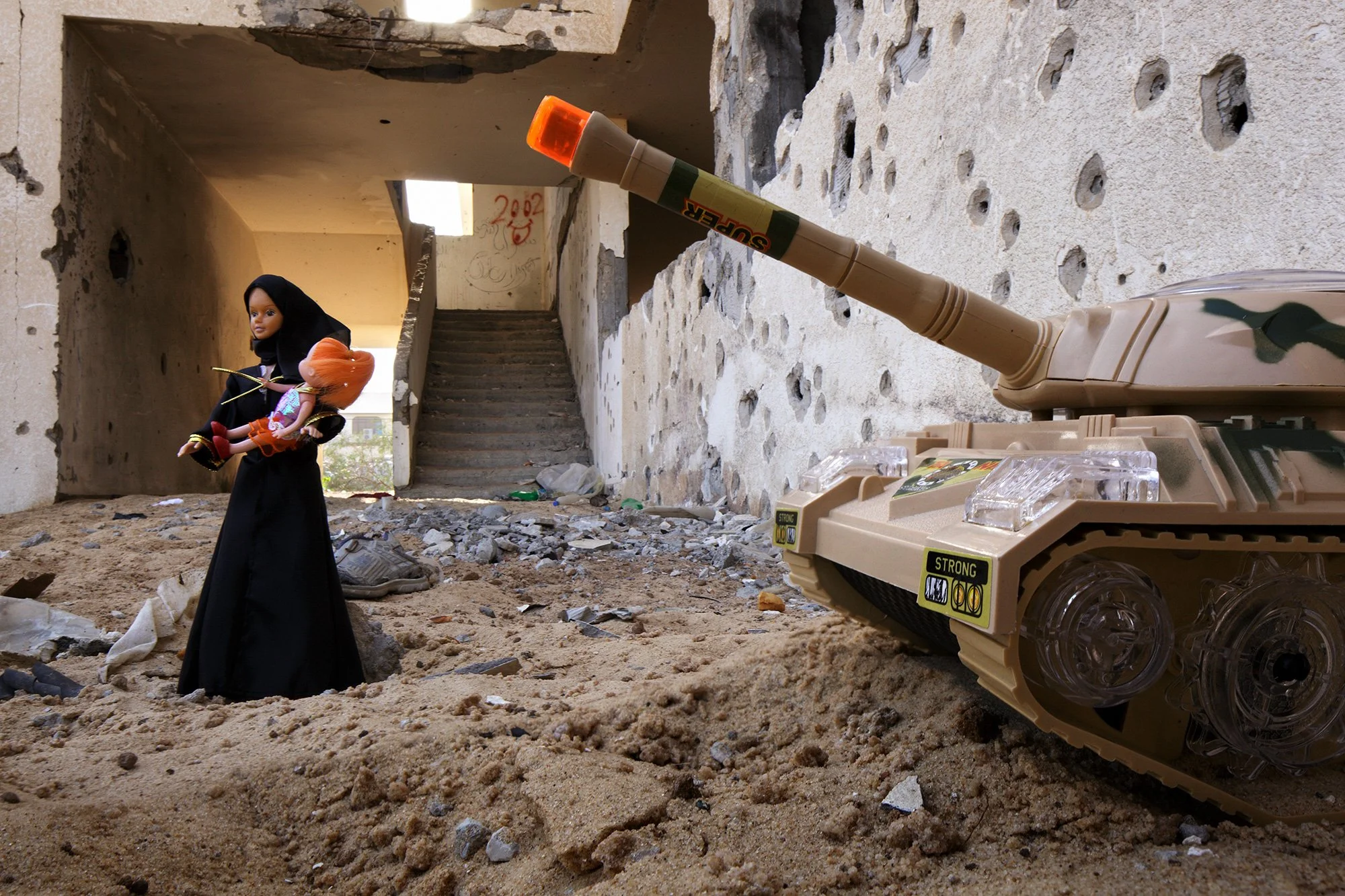
Mother of Violence
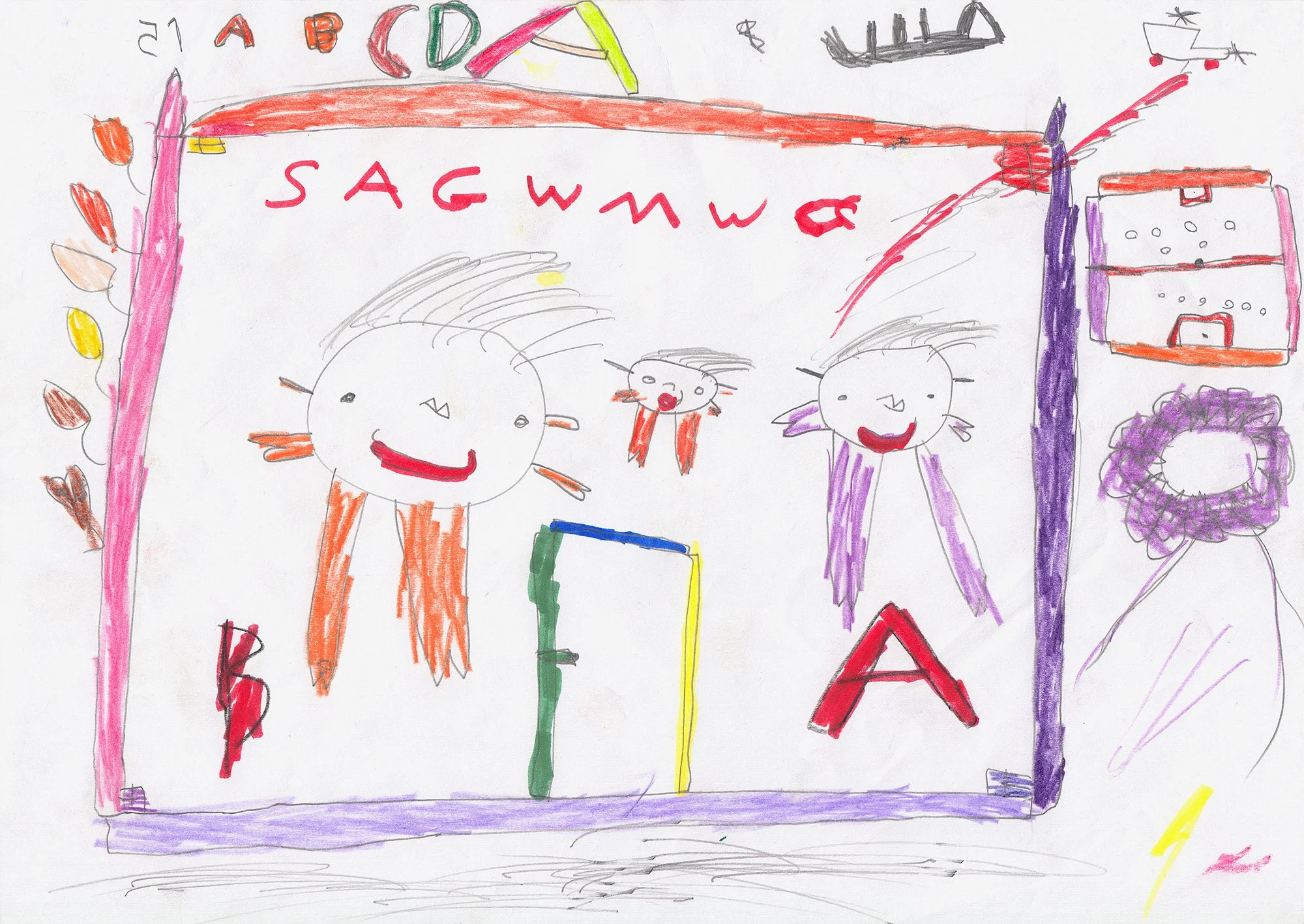
Homecoming
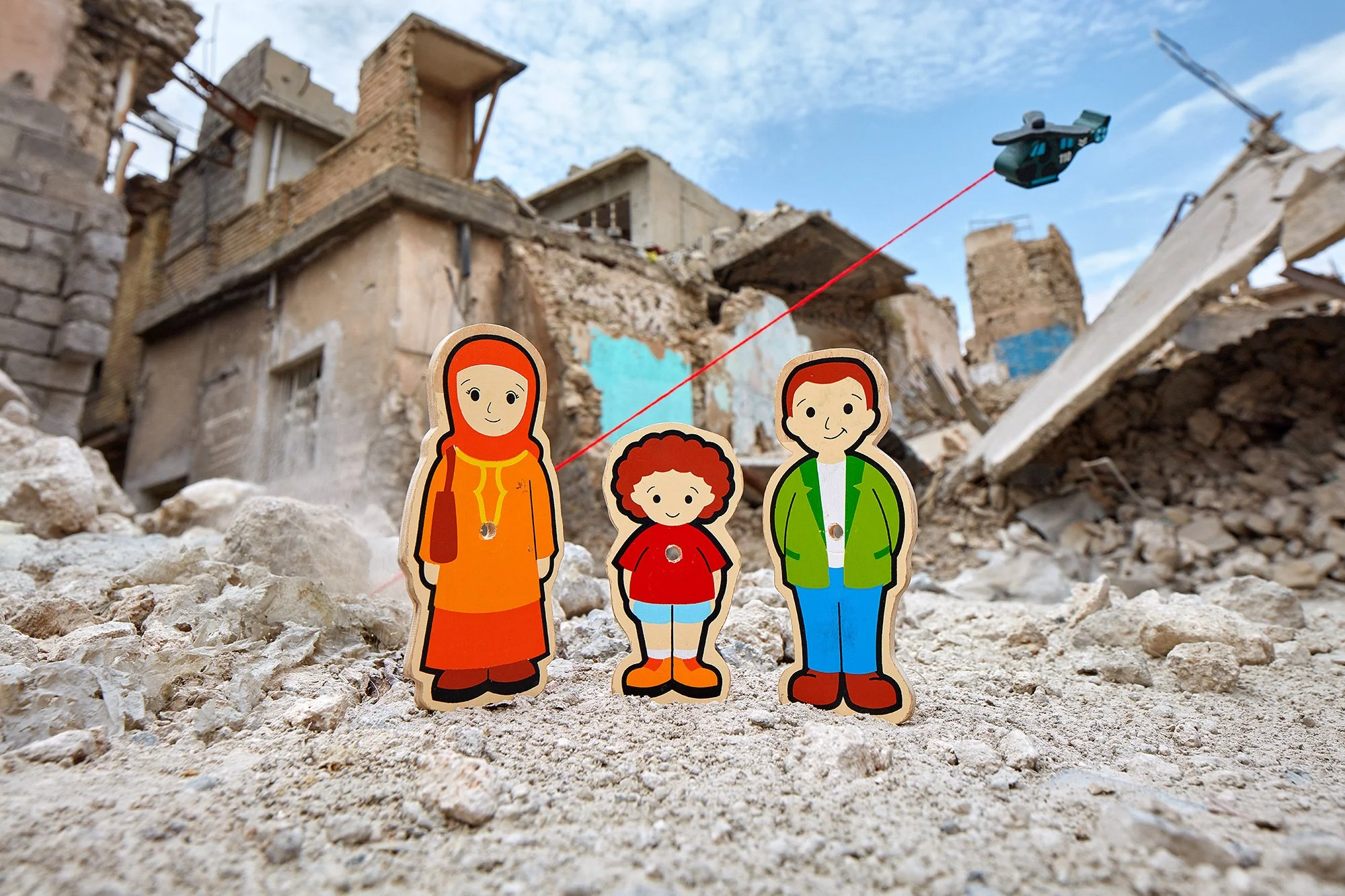
Homecoming
Collateral: How can people support War Toys?
Brian McCarty: War Toys is grateful to accept tax-deductible donations through our website or mail. On wartoys.org there are also some very cool toys, collectibles, and other items available to help support our work. Because we are a volunteer-based organization (with minimal overhead), people’s purchases directly fund our programs.
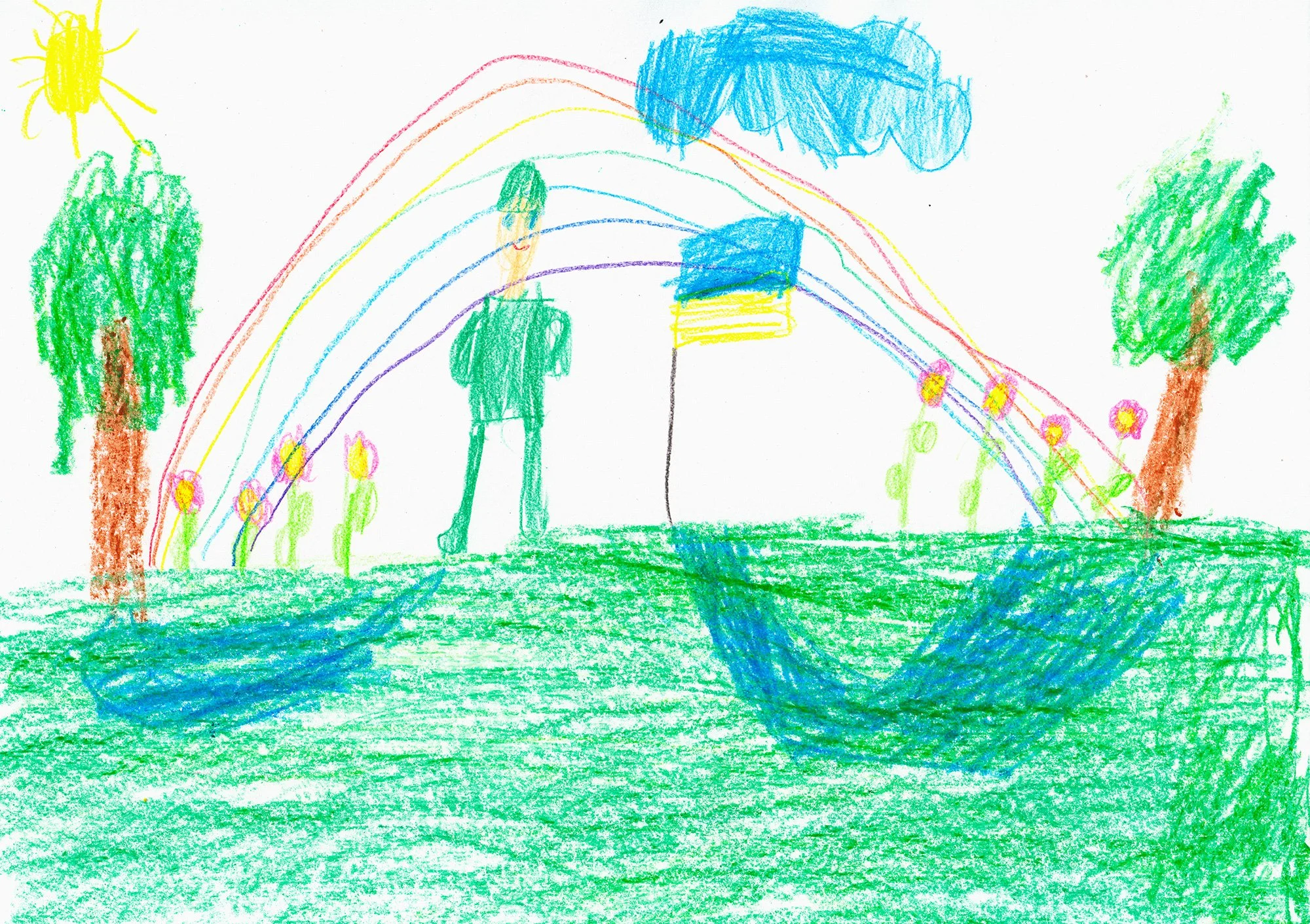
Rainbow
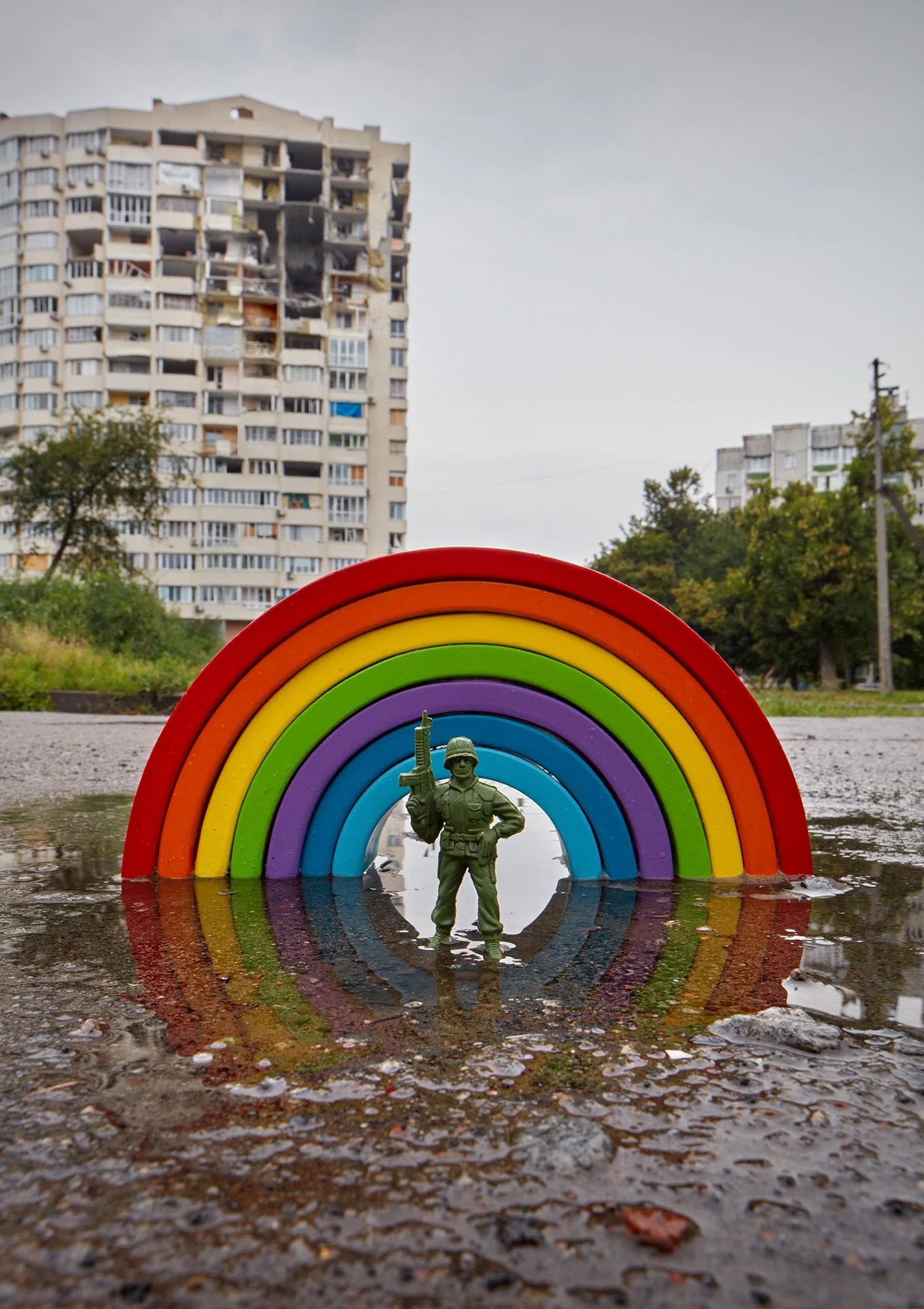
Rainbow
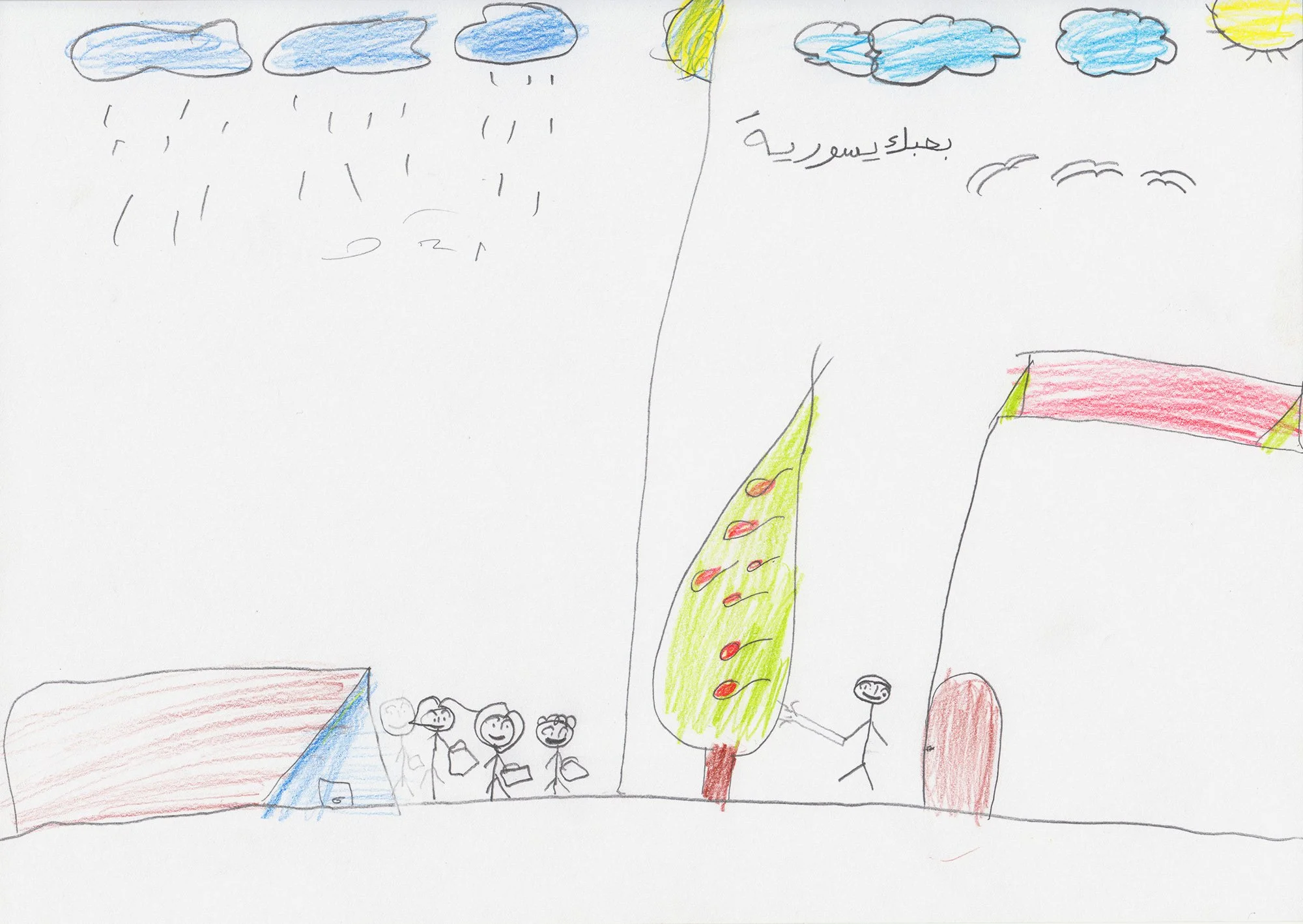
Refugee Camp Life
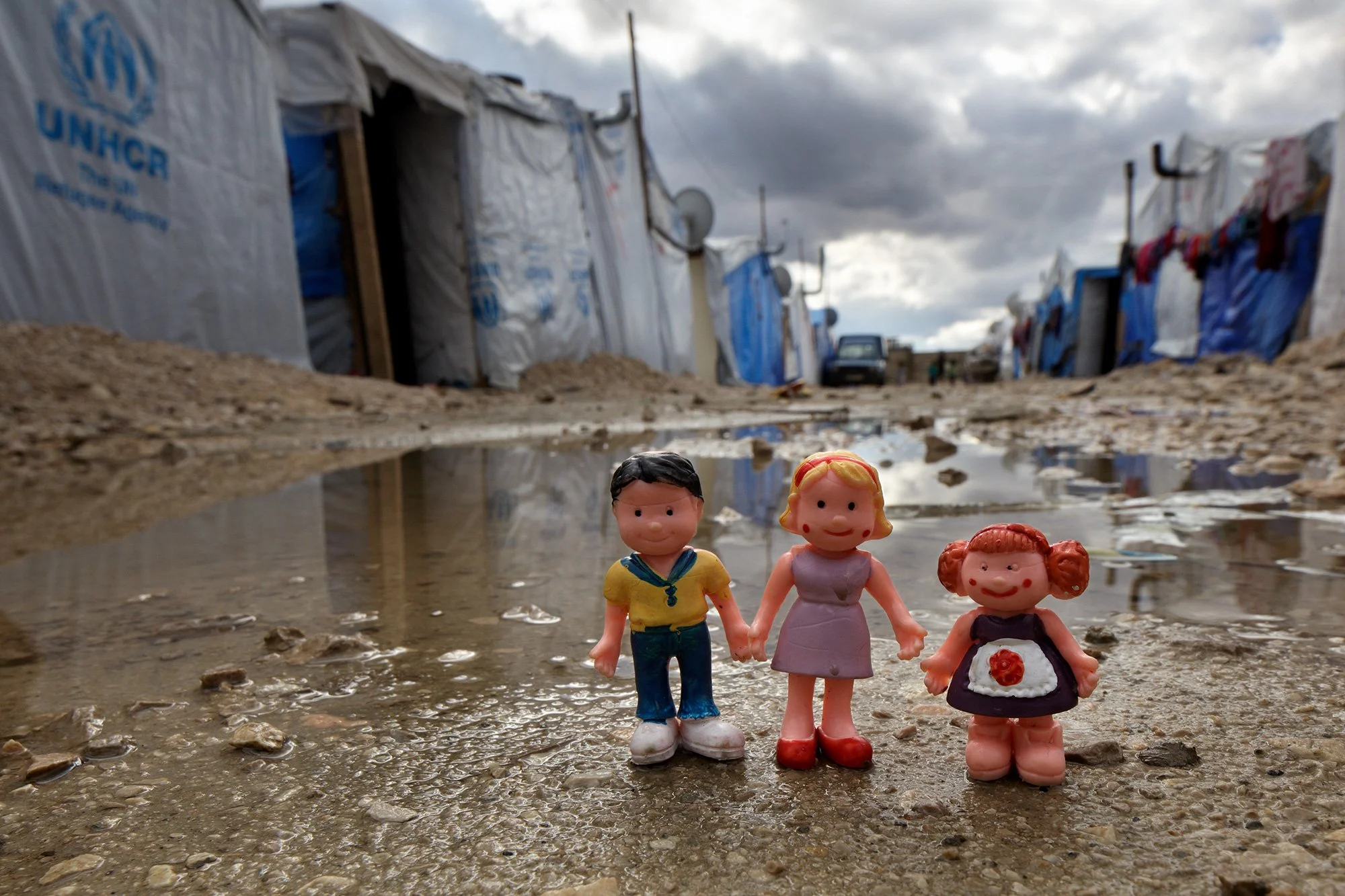
Refugee Camp Life