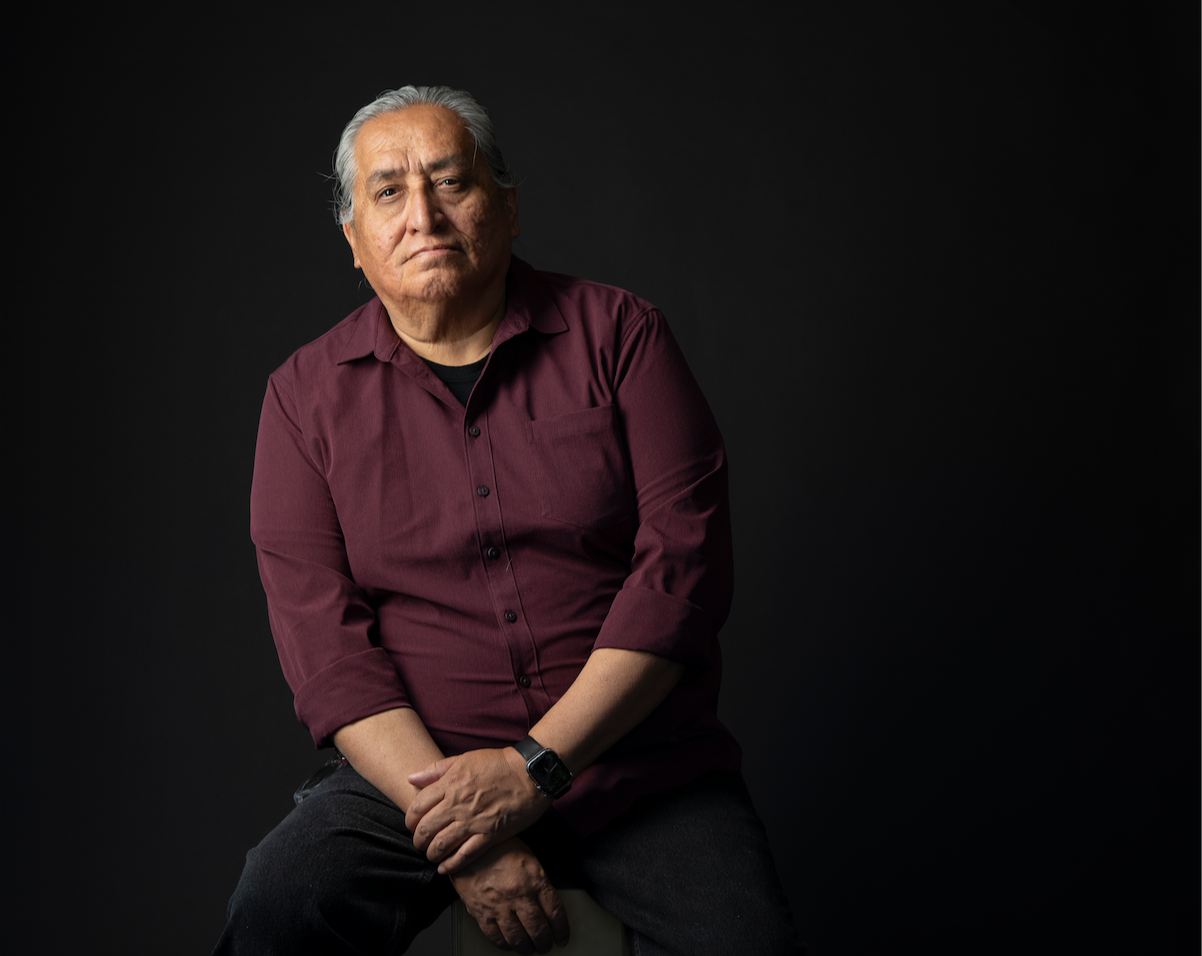
Interview with Marty Two Bulls
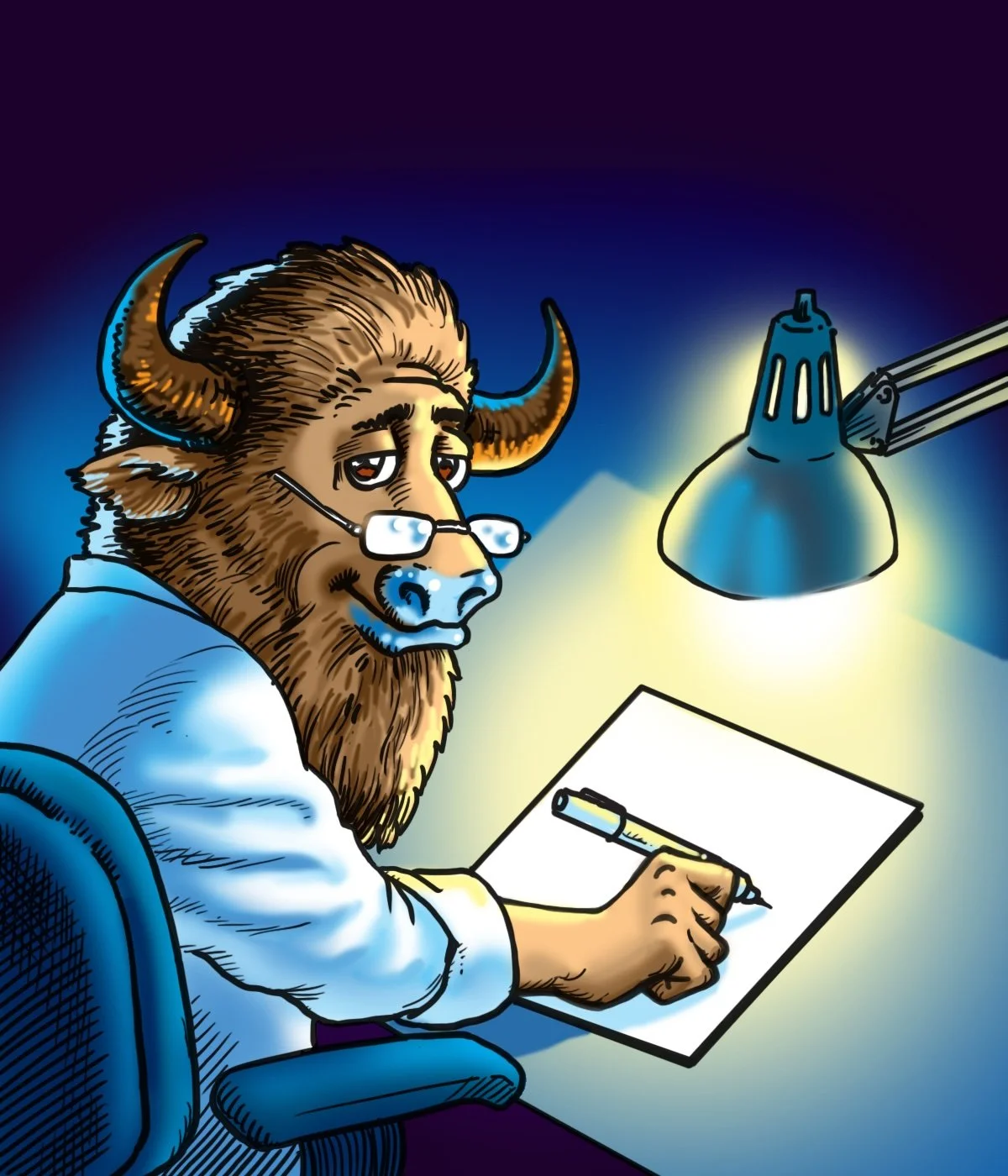
Marty Two Bulls Sr. is a member of the Oglala Lakota Tribe of the Pine Ridge Indian Reservation in South Dakota. He is a multimedia artist, working in a variety of disciplines as a sculptor, painter, illustrator and political cartoonist. With a varied art career spanning four decades, Marty has worked in the commercial design sector in television, print technologies, daily newspapers and new media. He has worked as a graphic editor for two of the state’s largest daily newspapers, the Rapid City Journal and the Sioux Falls Argus Leader.
Two Bulls has been creating weekly cartoons for the Lakota Times newspaper serving the Pine Ridge Indian Reservation since December 2001. Having produced over six hundred editorial cartoons, he continues to submit work week after week. “For inspiration I keep up with local and national news feds, and antics of politicians provide an endless supply of satirical targets.”
Marty says, “My passion is my search for the truth; I want to share what I have found with my readers in a medium that is easy to digest.”
Marty Two Bulls is an artist, graphic designer and award-winning political cartoonist. He works and studies in Santa Fe, New Mexico. His website is m2bulls.com.
Collateral
Can you tell us a little bit about yourself and what brought you to a career in editorial cartoons? What artists and journalists have inspired or continue to inspire you?
Marty Two Bulls
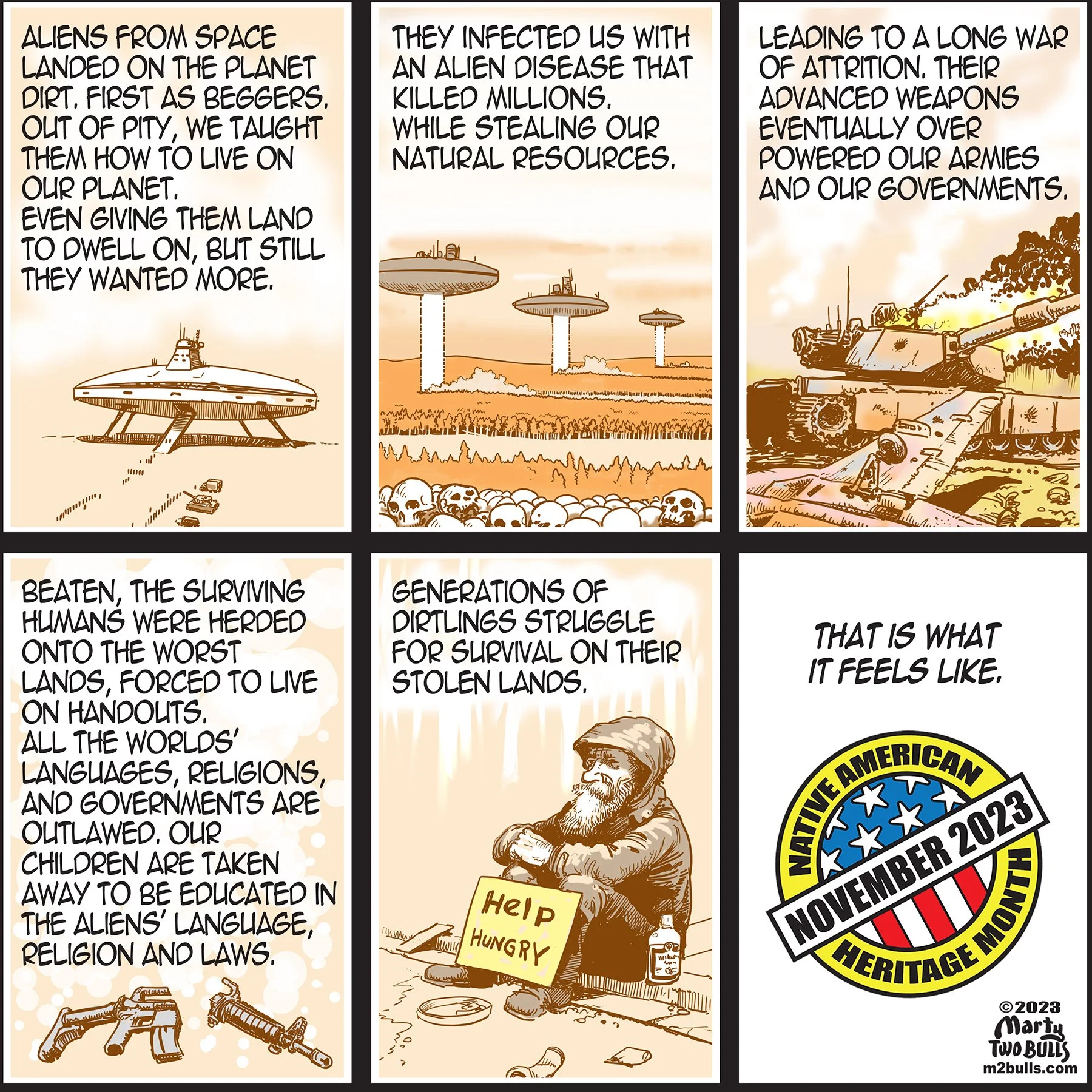
I’m a member of the Oglala Lakota of the Pine Ridge Reservation; our enemies call us the Sioux. My tribe is not too far removed from the time before European contact. My great-grandfather was born a free man on the plains, fought against General Custer and later the Kaiser Wilhelm. For better or worse, my Tribe has witnessed the end of our world and the start of a new. The Lakota would suffer from the change; first our lands were stolen, then our traditional language and religion were outlawed. Our children were taken under threat of starvation, to be educated in a foreign culture, language, and religion that taught them to forsake the old traditional ways. Native people were not even US citizens until 1924 (unless you fought in WWI). It wouldn’t be until 1978 that my traditional religion and language was legalized. That happened in my lifetime.
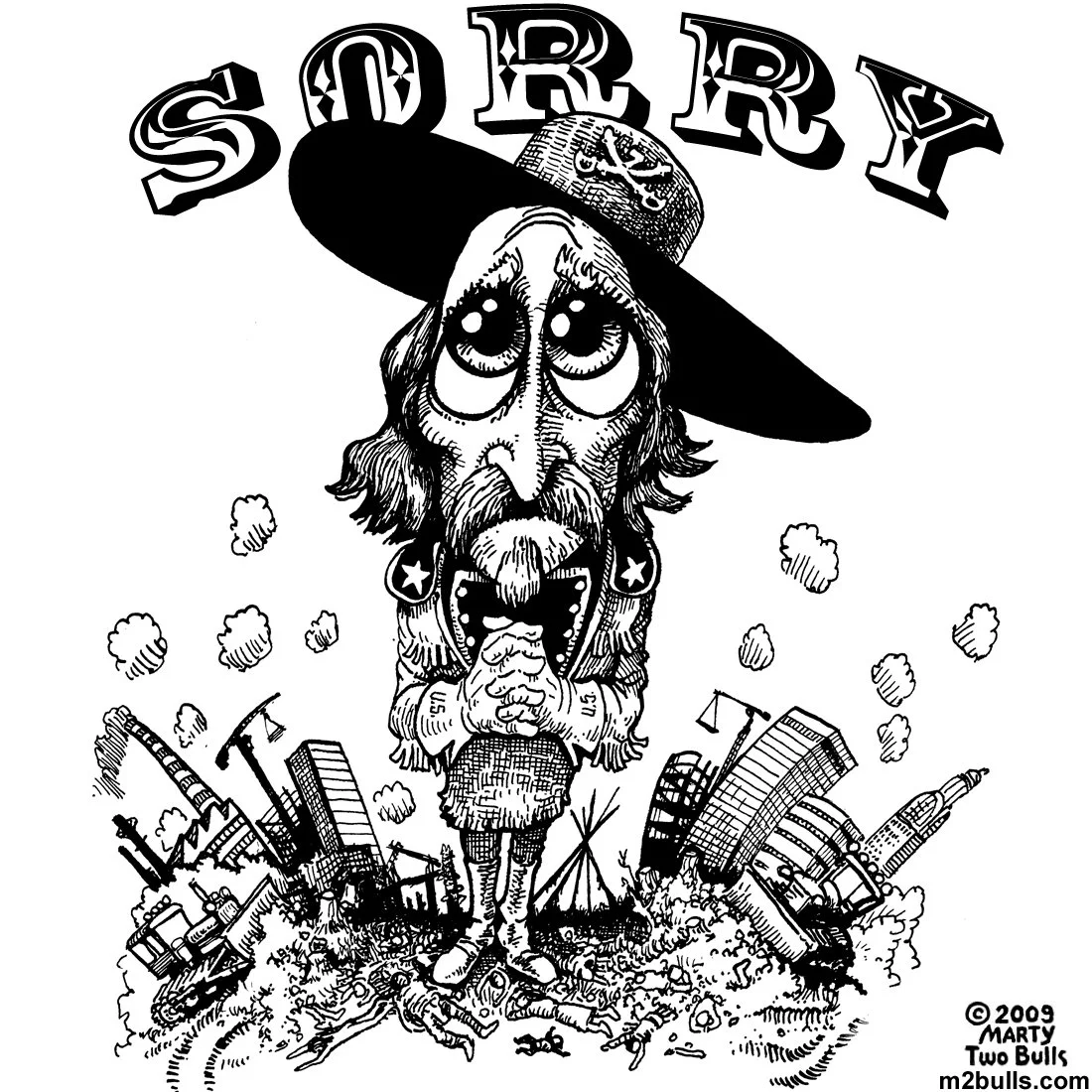
As a Native American growing up in the European American world, I found myself marginalized in the social aspects of school and higher learning. A black haired, brown skinned Native with a tribal last name in a sea of European Americans made me an outsider in my own traditional lands. Racism was in your face in those days, and not just from my classmates but from the adults as well. My fight against racism started early.
But the experience afforded me the opportunity to observe a world that was based on greed and the pursuit of happiness. Where being number one is the goal, exploiting other people’s weaknesses through deception and exploitation are considered redeeming qualities.
This is my American experience and what shapes my world views.

I was first exposed to the power of the cartoon medium in my childhood. I looked up to my many uncles; they were brave men who had fought in World Wars, Korea and Vietnam. Whenever they gathered, they would tease each other and share funny stories. At times they would draw cartoons of each other as caricatures and hang them up in their homes. The adults would gather around to admire the drawings—the better the likeness, the greater the laughter. Even back then, I knew that cartooning was something to be studied, and if possible, mastered.
My high school yearbook and newspaper were put together by students. This was an opportunity to learn the fundamentals of layout, design, and producing a publication. In time, I started drawing cartoon strips and editorial cartoons for the monthly paper. At the time, I had no idea that I would be doing cartoons for most of my career. After graduation I attended the Colorado Institute of Art in Denver, Colorado. I studied the work of Thomas Nast, a political cartoonist working in the later parts of the 1800s. I admired Mad Magazine’s Mort Drucker, the master of the celebrity caricature. My cartooning style was influenced by Wally Wood, John Severin, Richard Corben and Frank Frazetta.

Collateral
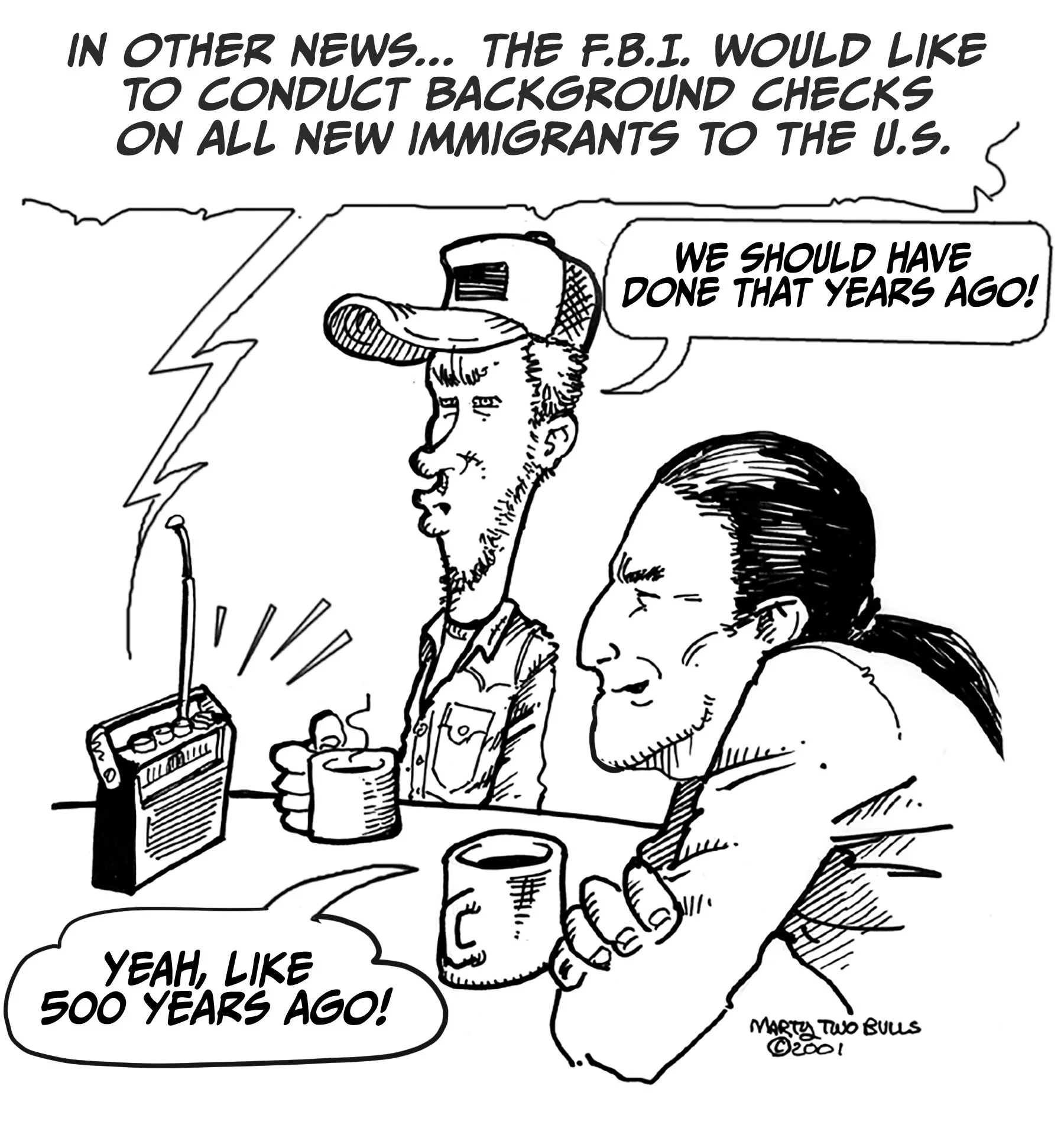
What was the process like, selecting samples of your work for this interview? How do you feel your style has changed over the years? What is the emotional impact of seeing older pieces that speak toward current events, such as your 2001 cartoon about the FBI’s investigations of immigrants?
Marty Two Bulls
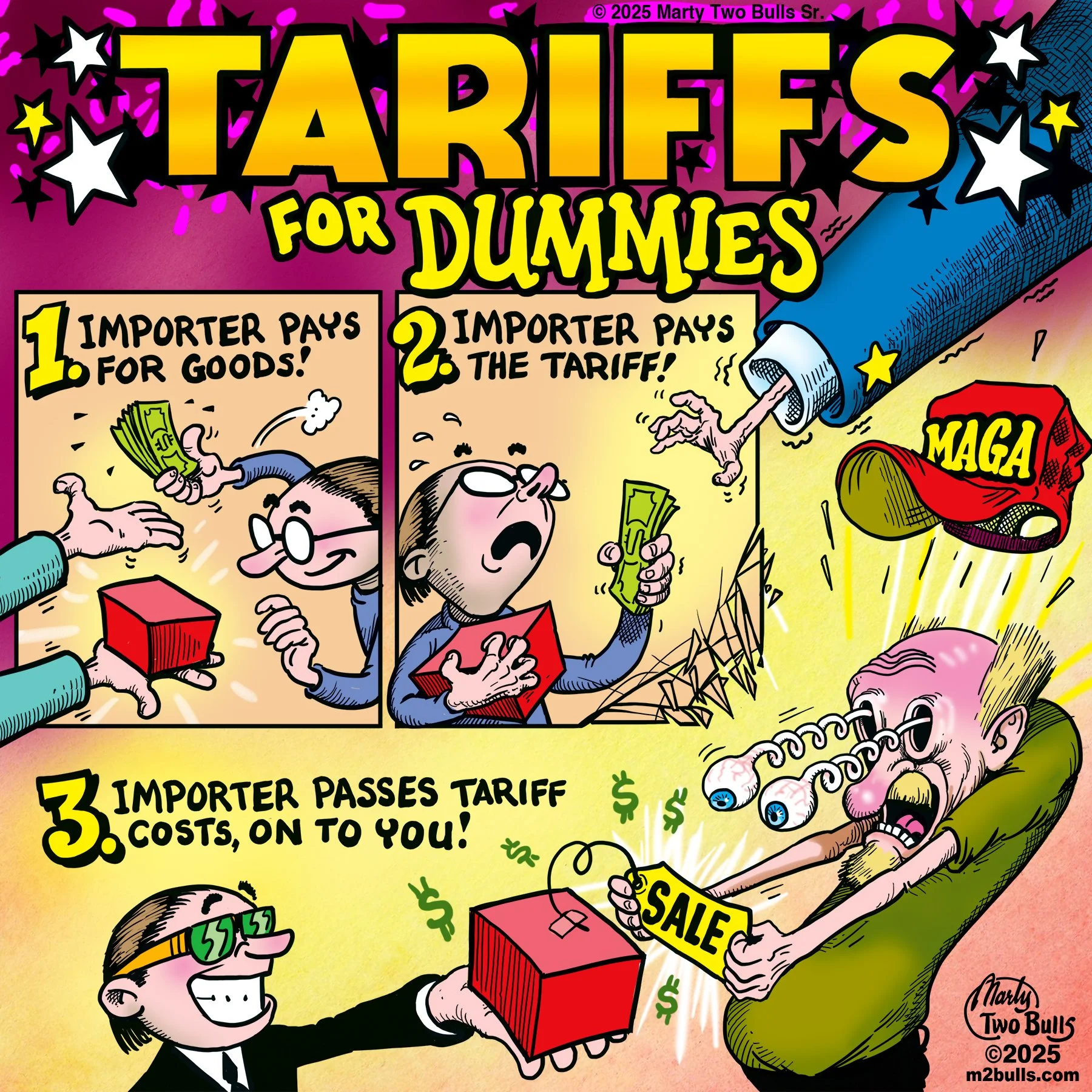
I had to make some tough cuts to narrow it down to ten cartoons. I was trying to select material that would be both recognizable and relatable to your readers. My style has gotten better over the years, which all artists strive to achieve. But I do spend more time on a piece than I did in the past, and that gives the newer work a more polished look. A fellow cartoonist described my work as “looking like a comic book” but I prefer to call it “clean”. I use a Wacom tablet and digitalize the work and color it in Adobe Photoshop, but sometimes when I feel like it, I break out the old illustration board, quill ink pen and watercolors. That keeps me sane.
I create the cartoons a week in advance and there are times when they do come true by the time it goes to print. As Mark Twain is reputed to have said: “History doesn’t repeat itself, but it often rhymes.”
If you study history, it becomes evident that there are no new solutions for the problems facing us today, only the rebranding of old political mantras that politicians regurgitate in the hopes that the public doesn’t notice. And that is where my pen and I step in.
Collateral
In a time of political chaos, with so many possible events that might inspire your work, how do you select your topic of focus? Do you approach local and national issues differently? Do you have advice for how to create in times of conflict?
Marty Two Bulls
These modern times we find ourselves in may seem daunting. But the reality is that we are going through the Computer Age. Much the same way the world went through the Industrial, Iron and Bronze Ages. Technologies will be left behind, jobs will be lost, uncertainty will make the citizenry restless.
In the Computer Age every single business had its delivery system change. Unfortunately, we humans have a built-in aversion to change and that resistance can be detrimental to business. As we have seen with downfall of newspapers, the music industry, and filmmaking, the people in charge resist change and are too late to adapt. In the new technologies, old expertise becomes obsolete, and jobs go away, never to return.
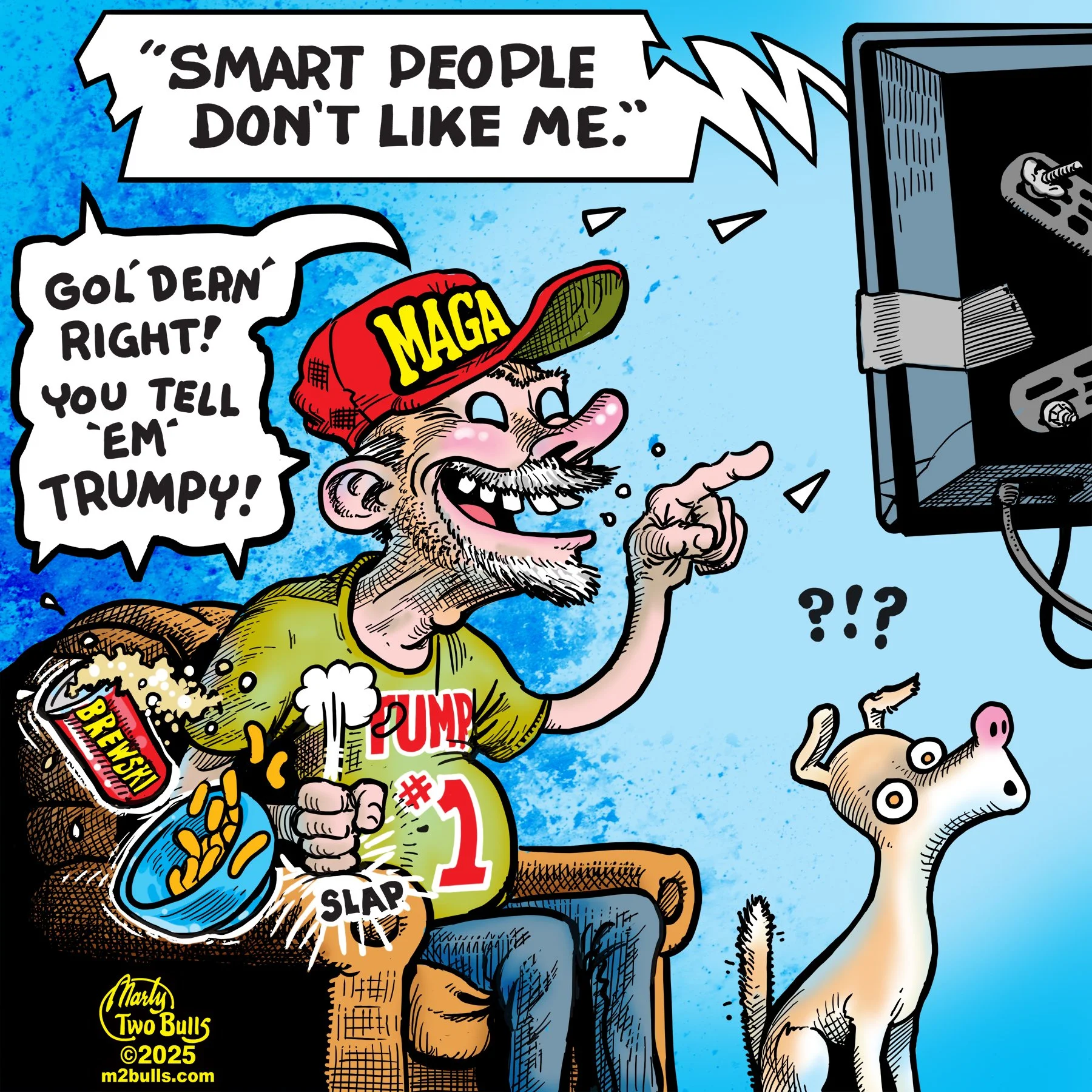
Politicians, on the other hand, struggle to stay in power by making promises they can’t hope to fulfill, like returning to the good old days. Understanding this pattern allows the artist to see the truth and the players that make their careers by hiding it. Political satire thrives on this hypocrisy and irony.

Collateral
How do you condense a complicated issue, along with a variety of symbols, into a single image?
Marty Two Bulls
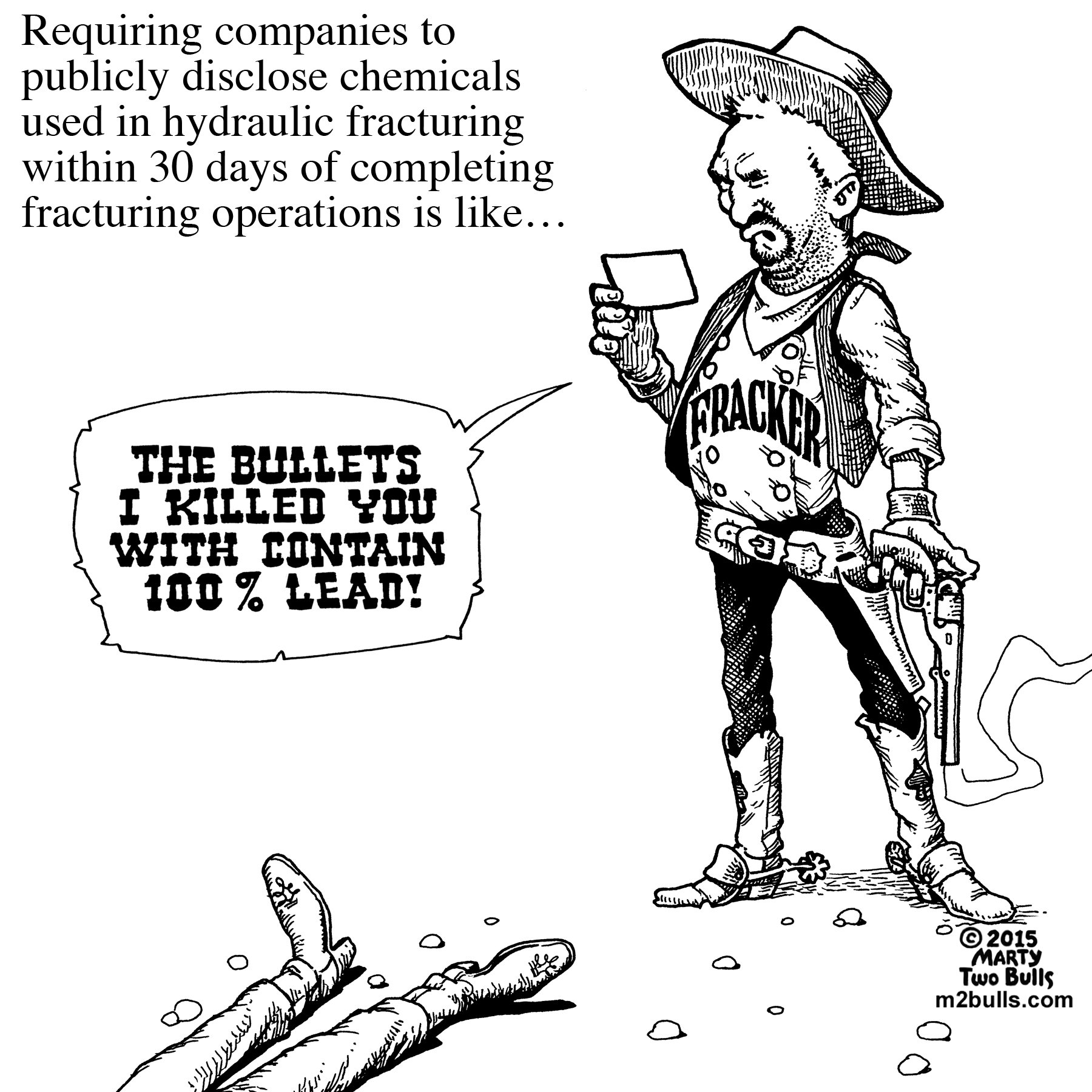
Cartooning is an art form blending the written word and drawing to tell a story. Multiple panel comics are referred to as “comic strips”, single panels are “gags” and long form comics are “comic books” or “graphic novels”. Political cartoons are designed to fit into a single panel or multiple panels that reproduce around four inches wide on the opinion page of the newspaper. The intent is to express editorial commentary on topics ranging from local to national news. As the idea for the cartoon starts to solidify, it must be reworked several times. The text must be simplified and to the point. It involves writing clearly and knowing when to let the drawing tell the story.
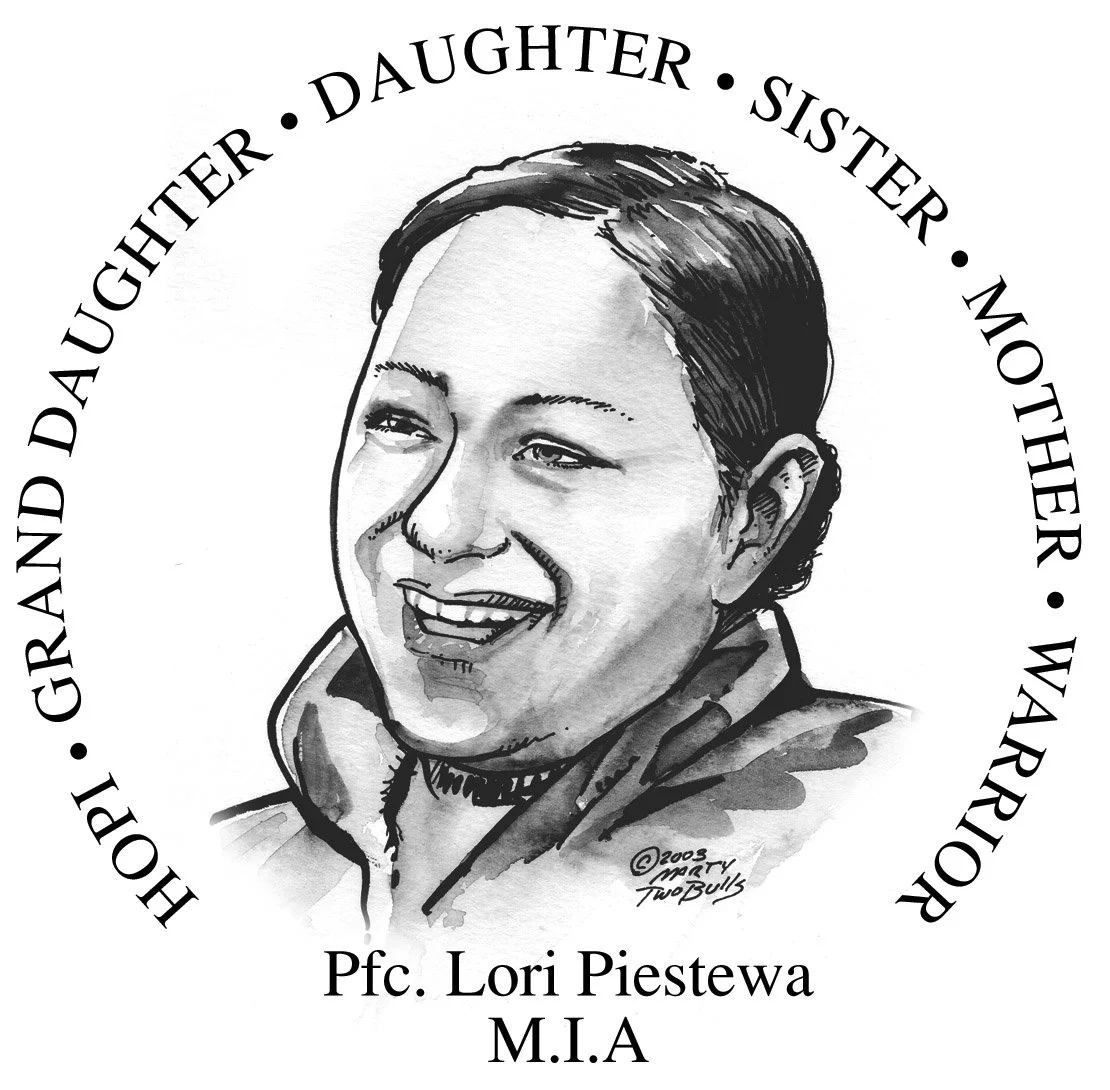
The creative process for the drawing is organic yet complicated; it can’t be faked or coerced. Composition encourages the reader’s eye to travel over the piece. Research into principal characters and equipment takes time. When I nail the caricature and feel confident, I will not label the drawing with the target’s name. Color when applicable must balance the layout and draw the eye to important aspects of the illustration. Overall, to be successful, the cartoon must be either funny or empathetic.

Collateral
Your non-satirical pieces have a more realist style, while your satirical pieces have a caricature style. Can you tell us how you came to develop those styles? In satirical pieces, how do you balance humor and the seriousness of complex, sensitive political and/or cultural topics?
Marty Two Bulls
As you point out, I render the editorial in a realistic style to invoke an emotion other than laughter. There are times when the news is just so sad, so terrible, that I need to speak to my readers in a serious voice. It is then that my pen can only tell the truth.
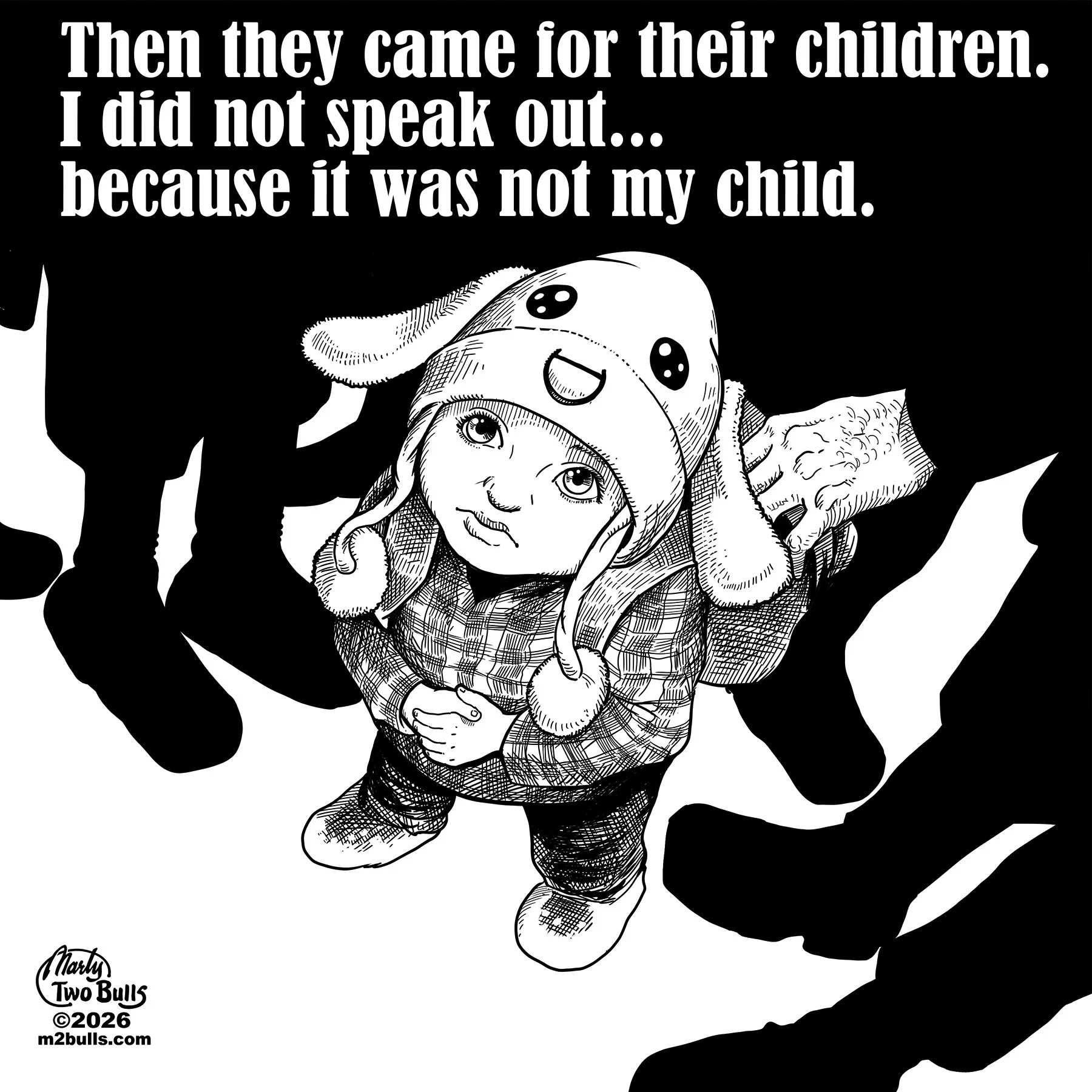
This is a very powerful medium; it is left over from another time when newspapers were the main source of information. I spent most of my career in journalism, I’m a newspaper man, I cut my teeth chasing stories, working under hard deadlines. I was a seeker of the truth. There are people who think the truth is ugly and they will hide it, they will even kill to keep it secret. But for the journalist, the truth is beautiful and something that we should place on a pedestal for all to see. The truth can enlighten and break your heart at the same time.
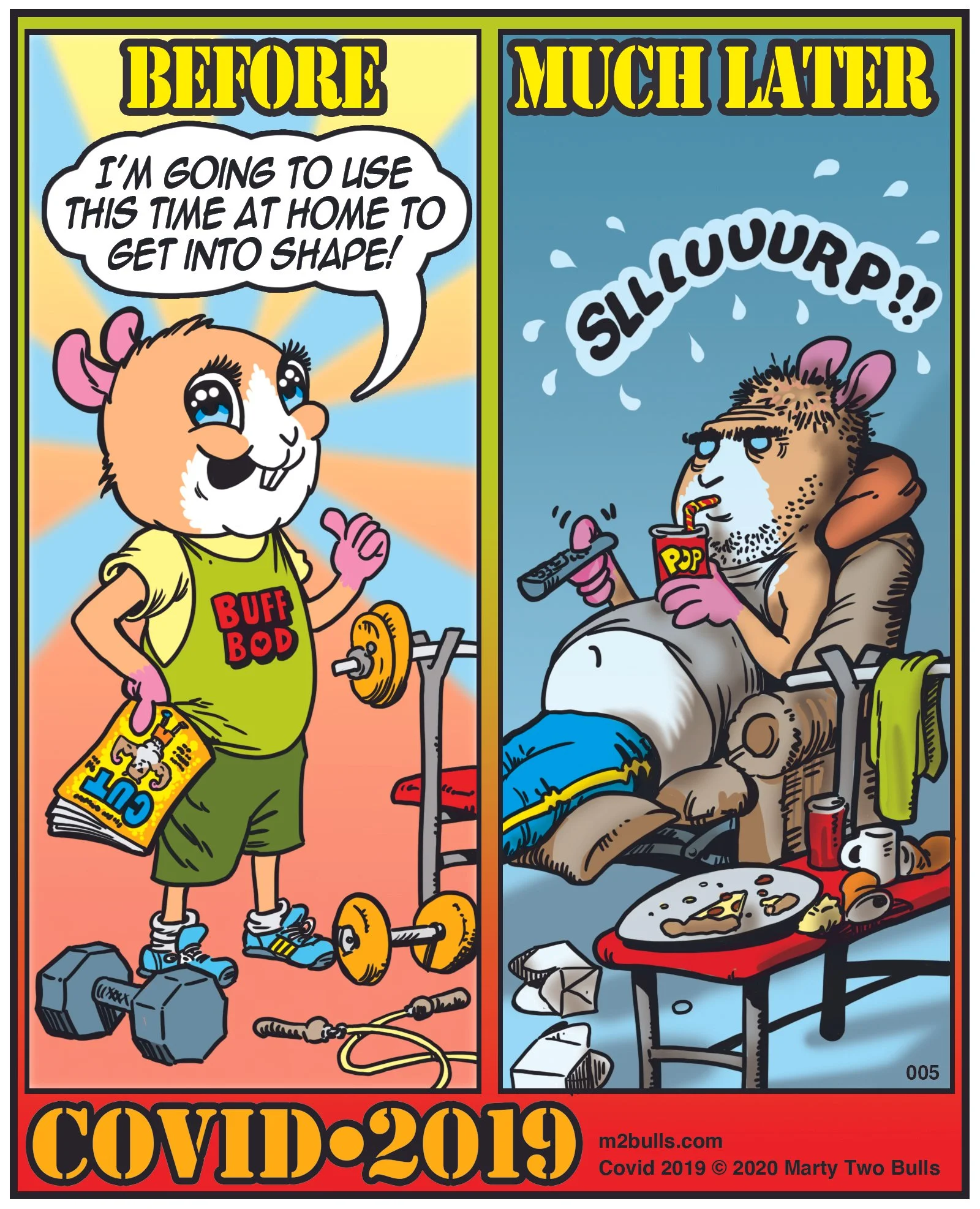
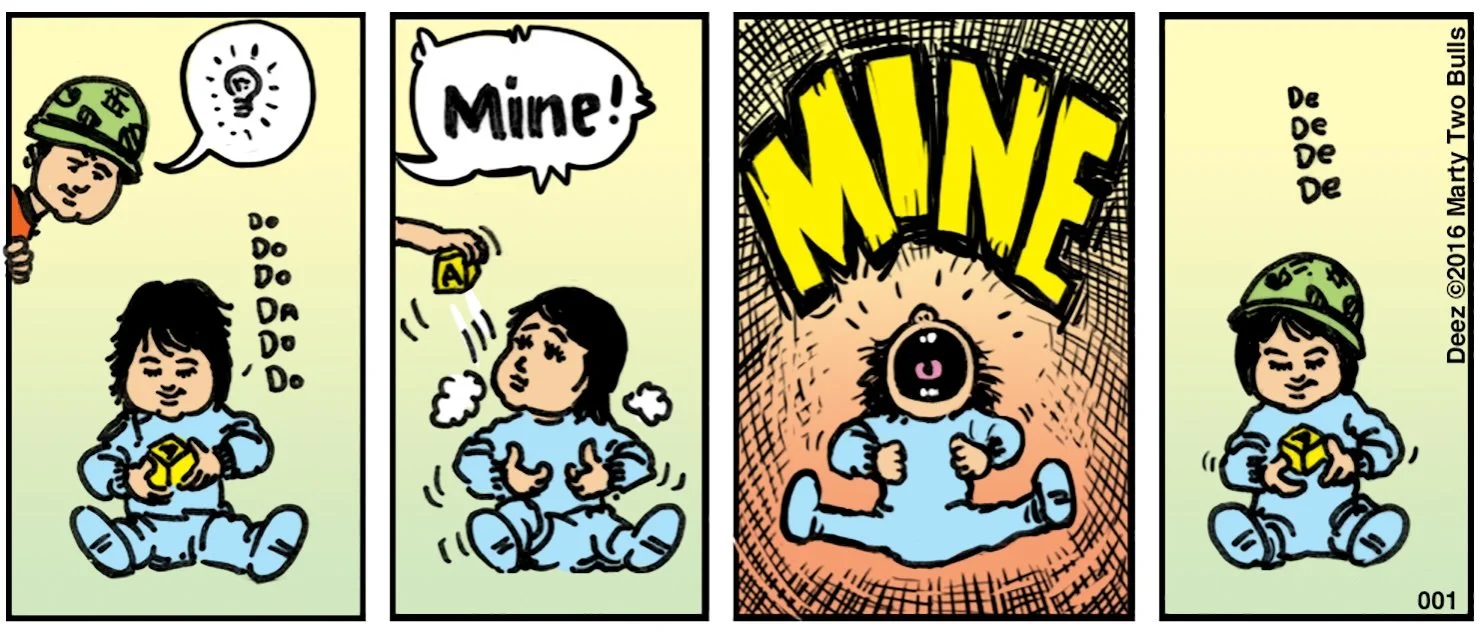
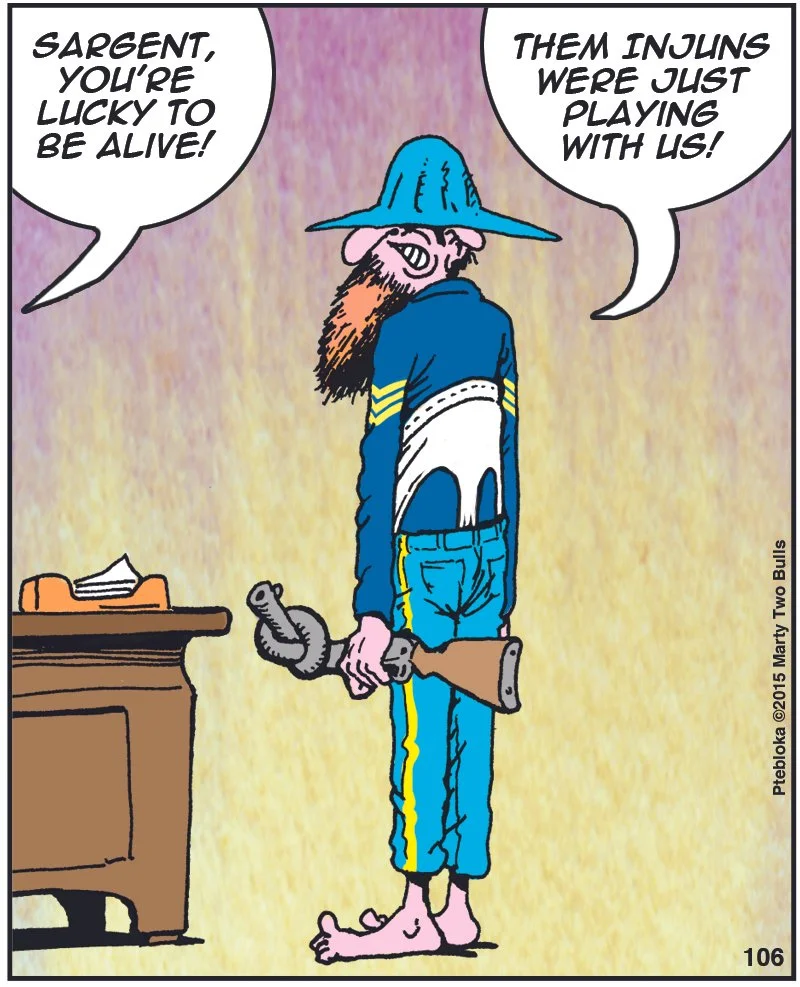
I’m also an artist that loves to tell good stories. I deploy varied styles that I think appeal to my different readers. I have done several cartoons over the years; a comic strip called Deez, that is of my baby daughter, Ptebloka (a Lakota word for “bull”) a gag cartoon that makes fun of old west stereotypes, Rez Dogs, a comic strip that started political but morphed into a family strip, and Covid 2019, a gag comic that used hamster characters caught in the pandemic.
Collateral
Satire is often a target of censorship. Have you ever experienced censoring? How do you respond to negative feedback toward your stance on a subject matter?
Marty Two Bulls
I was once tasked with creating a cartoon to run along with an editorial essay that was unfairly critical of a civil servant just doing his job, an opinion that I did not agree with. But I was young, and the cartoon was an extra paying gig, so I did the cartoon. Much later, I ran into the said civil servant in public and nearly got into a fist fight with him over the cartoon. Now, I don’t mind fighting for something I believe in, but that was a cartoon not of my opinion. But it had my name on it, and I could not defend it. From then on, as a rule, I would never create a cartoon that I didn’t believe in.

I self-censor as an artist; I don’t allow my work to be created by committee. Because I was never a staff political cartoonist, my livelihood didn’t depend on bending my ethics to the will of my employer. So, if a paper doesn’t want to run my work, well, that is fine by me. But I will not alter the work to spare the feelings of advertisers or politicians.
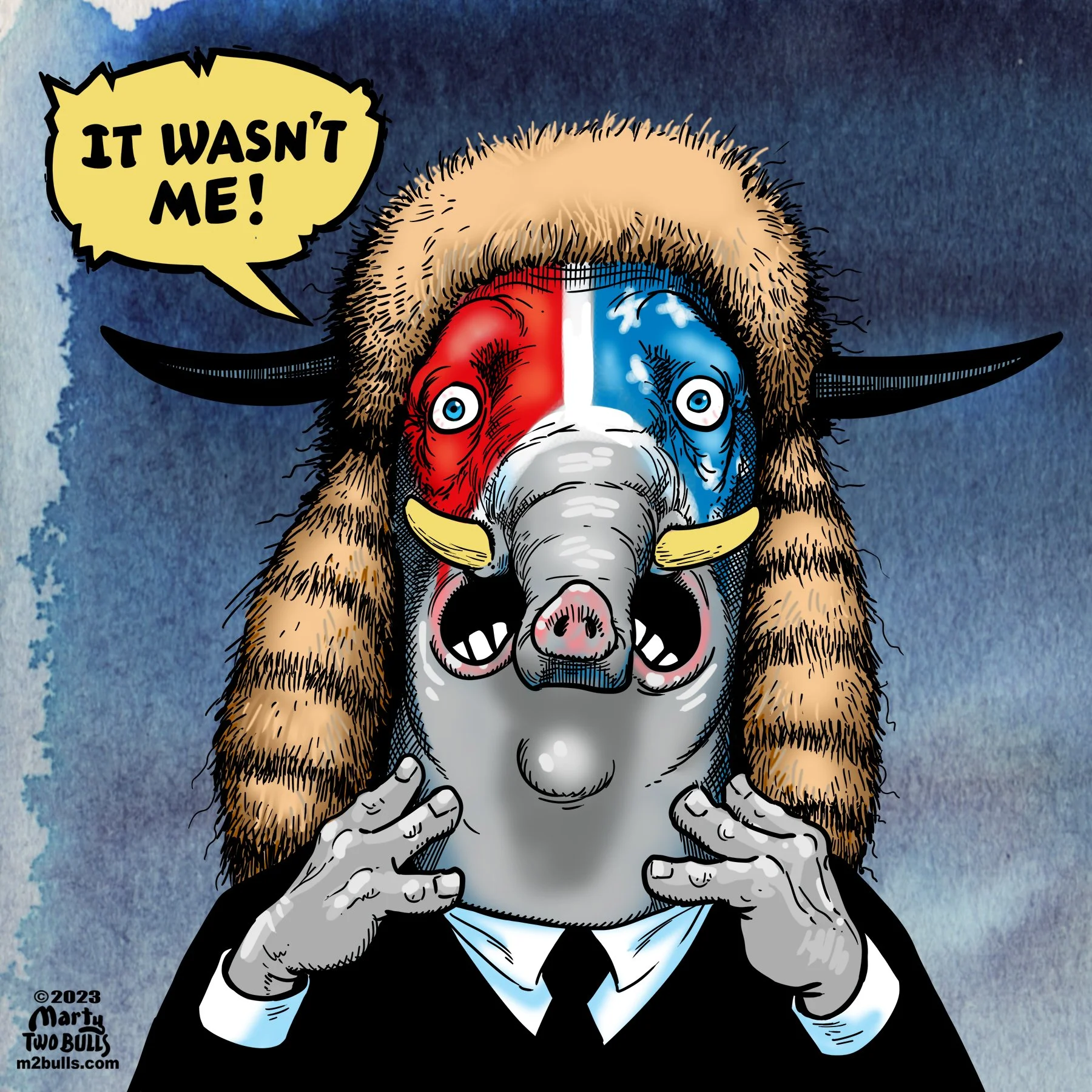
I wrote opinion pieces as a member of our editorial board, the voice of the newspaper. No one would read them. But when I drew an editorial cartoon about the same subject, we had readers writing into the paper, expressing their own opinions on the subject. Back then, if you wanted to write a letter to the editor, you had to write it down on a piece of paper, fold it up in an envelope, put a stamp on it and mail it out. You had to have a lot of passion to go through all that effort. That is the reader I want to cultivate. Even if they don’t agree with me. My old executive editor once said, “If you are not pissing somebody off, then you are not doing your job.”
I rarely read the comments on social media because a lot of it is untrustworthy, artificial, and counterproductive.
Collateral
How do you see the future of freedom of the press and of expression? What advice do you have for those who aspire to become political cartoonists?
Marty Two Bulls
Most people get their news from the internet, but on the same hand they also don’t trust the internet. With the advent of deep fakes, AI and foreign bots, the internet landscape is getting harder to distinguish the truth. Because of the anonymous nature of the web, there are no repercussions to posting lies, slander or extortion. The reader is forced to seek the truth by researching viable news outlets, cross referencing and verifying sources. That is something most readers don’t have the time or willingness to do. At some point the internet will be known culturally as an untrusted media.
That is when a new trusted information medium will step in to fill that void. What it will be or what form it will take is unknown at this point, but the first to figure that out will make the most money. As a novice, your success depends on recognizing changes in technologies and how the public interacts with the media. Adaptation and a willingness to change help your growth. Cartooning will always be there because it still takes creative thought to create work, and that is beyond artificial intelligence. Also, what is often overlooked is the fact that AI cannot copyright its own work or enter contractional agreements to sell said copyrights. So, anything that AI creates can be “borrowed” and reused with no compensation to developers.

As an artist, I can create a painting, and the subject could reflect my ancestors or have religious iconography that would move the viewer in a very profound way. Then I would sell it to a collector and never see it again. Sure, I could make inexpensive posters, shirts or coffee mugs. But that is not the way a painting is meant to be experienced. But a cartoon is designed to be mass produced, to entertain and educate thousands of readers. I started to create these drawings for my people, my tribe, as a reflection of their interests, expectations, and fears. I wanted to reach out to people with humor and illustrations that hold their interest long enough to get them to see the world from another point if view.
Collateral
Do you consider yourself to be a historian and/or activist? What mark do you hope to make as a recorder of history? What is the most important thing you want people to take away from your work?
Marty Two Bulls
Over the years, the cartoons have inadvertently become a record of historical events in my lifetime. Ironically, the drawings I turned loose on society would later come back and turn me into a historian. Activism is a burden that I avoid; I’m not a member of any political party or subscriber to any ideology. This system of government has attacked and stolen from the indigenous people since Columbus stumbled on our shores. We should all hold our elected officials to higher standards and not trust in what they say, but what they do. I only try to present the truth and let the reader decide.

The Native American Indian is slowly disappearing from the races of the world, caused by a natural process called Blood Quantum. Every Native has an ancestor that is full blooded ‘Tribal name here.’ At some point the ancestor will marry outside their race/tribe, the offspring will be half native. This may go on for several generations, resulting in the fraction going down to 1/32 or lower. The tribal members’ children will not be allowed to enroll in the parent’s tribe. A simple math problem will do what the government and all its military could not do: wipe out the Indigenous people.
That is the sad truth of my people: we may last a hundred or two more years, but in the end, we will be gone. Blended in the mixing pot. But our blood will flow in future generations. My hope is that people will have in them enough of the native DNA that makes decisions that will effect not just the present, but how it will benefit future generations. A few hundred years from now, these cartoons will be one of the few records of how a native man saw his world. Lofty? That may be… all I ever wanted to do was make my uncles laugh.
Mitakuye Oyasin, For all my relatives.
Collateral
Where can we find more of your work?
Marty Two Bulls
Google me: Marty Two Bulls Sr. You can also visit me here:
m2bulls.com
https://www.patreon.com/m2bulls
https://www.gocomics.com/m2bulls
https://www.facebook.com/martytwobulls
https://www.instagram.com/m2bullz
https://www.tiktok.com/@m2bulls