
Parvaneh Ravadgar
Wind, Rain, and the Flowerpot
Everything began with an explosion. A light split the sky and shrapnel tore through my foundations. In the blink of an eye, the rooms that had sheltered years of joy, sorrow, and exhaustion collapsed into one another. I was shattered, but not destroyed.
Father always said with pride, my house stands in the safest part of the city, right beside the police station. But he never knew that war has a way of overturning the certainties people build their lives upon.
After the explosion, I tried to rise onto my foundations, but nothing would lift. Walls, ceilings, and rooms no longer existed. Nor was there any trace of the furniture that had once filled them. And yet, something unfamiliar stirred deep within me.
Fortunately, my family was not home that night. The eldest aunt had invited them over for dinner. She was the same aunt I had watched quietly slipping money beneath the carpet, or arriving with a pot of food under one pretext or another, just so they could share a meal. Even now, her quiet protection still stretched over the family.
For the first time, I felt lost. I waited for my family to return. I yearned for them to fill me with movement again, to begin putting everything back together. But they did not come.
I had been an old, one-story house with a large yard. By day, sunlight settled across my roof and stretched over my yard. In one corner, an old tree had sunk its roots deep into my soil—the very tree the little boy loved to climb. Sometimes, in my dreams, I can still hear his laughter echoing through the yard.
The weight of the rubble that remained scraped against my memories. I found myself wishing those memories had vanished with the explosion, so I would not have to go on carrying them.
It was several hours into the morning before they finally arrived. Aunt clutched her head with both hands, weeping alongside everyone else. Then she said, the empty floor of my house is yours for as long as you need it.
Mother, who had loved me more than anyone, stood gazing at my ruins with quiet longing, letting out one sigh after another. How I wished I could hold her within me just one more time. Father thanked Aunt with a smile, but he could not hide the sorrow in his eyes.
Their fourteen-year-old son burst out, yes! Auntie’s house is bigger and newer—and it’s in a better neighborhood, too. Mother turned to him, her brows drawn together. A tear slipped down her cheek. Somewhere beneath the rubble, something gave way, sending a cloud of dust into the air.
The seven-year-old was crying for his little blue wind-up car. Suddenly, he broke free and ran toward me. A police officer blew a long, sharp whistle. Father rushed after him and pulled him into a tight embrace. I, who had always been a place of safety and shelter, had become a source of danger.
The family returned the next day. The police had arrived before everyone else, while the municipal trucks came later. The little boy stepped forward, but one of the officers stopped him. The rubble may be contaminated with hazardous chemicals, he said. The trucks hauled away the debris. The little boy watched intently, but there was no sign of his blue wind-up car. Everything was gone. I remained suspended between the earth and the sky.
Several weeks passed. One day, Mother was talking to the woman next door. She told the neighbor that the family spoke of the old house less and less. Their therapist had explained that, in order to keep living, people sometimes learn to touch certain memories more gently. They wanted to bury the memory of me.
Before she left, Mother added that Father no longer laughed the way he used to. The older boy spent most of his time alone in his new room and rarely went outside. The younger one had lost his appetite, and his grades had begun to slip.
Time passed. Each morning, I greeted the first light of the sun, and each night I welcomed the moon rising in the open sky. From time to time, the wind would come and gently brush across my bare earth. I had grown frail, my will to endure fading. One night, when the wind came, I let out a sigh. It circled around me several times before drifting away. A few days later, at dusk, the rain arrived. The wind returned, circled me once again, and then disappeared.
The next morning, I felt strangely restored. That evening, Mother returned to look at me. She told the neighbor woman that, during yesterday’s rain, she had caught the scent of the old house and wept.
Not long after, inspectors arrived and announced that the soil beneath the house was not contaminated and that a permit for reconstruction would be issued. Father was unsure that he wanted to rebuild. He said that maybe the family should buy land somewhere else—a place he believed would be safer.
Many people came and went, interested in buying the land where I stood. One evening, Mother told the woman next door that Father had dreamed that the golden and violet buds on the wallpaper of the living room had blossomed. I still remember the early days, before the younger boy was born, Mother sitting eagerly in front of the computer, searching for the perfect wallpaper to put in my living room. The room she loved most.
Aunt cried out, I also dreamed about the house. You gave me the old bowl we inherited from Grandmother. The one with such beautiful painting on it.
I also sometimes saw the littlest boy. He was the saddest of them all. He would ask why, after all this time, he was the only one to dream of his toy car—the same car he still occasionally searched for in my rubble, believing that nothing like it would ever be found again.
It comforted me to find out that I sometimes entered their dreams. From time to time, when they needed me the most, one of them would find something in a dream: a room, an object, a corner of the past. Even though my bones had shifted and settled into just a small hill, I felt better, because the family still dreamed of me.
The wind, too, continued to arrive silently now and then, passing through and leaving again.
One day, a buyer arrived. He liked the land. He left with the real estate agent, then returned several more times with Father to negotiate the price of my ground. No one spoke of memories anymore. The land was sold—for a low price. Machines arrived and began digging. The frame of the new house slowly rose from the earth. Its walls shifted me out of my former shape. The builders put up bricks that blocked my path, and the huge machines ground me up into dust. And so, I, too, slowly crawled toward the small garden that seemed destined to remain a garden. I did not know what awaited me.
One day, Mother arrived carrying a plastic bag. She said she missed me. After asking permission from the new owner, she took some soil from the garden. I entered the plastic bag with the earth. I went with Mother to the new house. She spread the soil and inhaled its scent. Aunt came upstairs carrying tea.
Mother said every night she had dreamed about the smell of the old house.
Above us, I saw the wind pushing the clouds across the sky.
Mother poured the soil into a flowerpot and planted a dahlia in it. She placed the pot on the terrace railing. The flower bloomed, and Mother grew attached to it. She would say that it carried the scent of the old house.
Now I could finally rest forever in the soil of the flowerpot.
When the wind came, sometimes it picked up small pieces of the soil from the flowerpot. Sometimes my dust was picked up, too. I was scattered onto rooftops, courtyards, and streets. Once again, I created small memories of my own—the kind made from a paper flower bud on a wallpaper, the kind that unfolds on the end of a dahlia plant, in the warmth of a spring sun.
Years passed. The wind returned from its journey and told me that, in another city, a child had told his mother he had dreamed of digging up the garden soil and finding a piece of broken blue plastic, a few small wheels, clinging loosely to a rusted metal rod.
I watched the wind lift away to circle around another house. I could not tell whether it was carrying something away from there or bringing something back. The wind scattered dust made of memories into the face of a passerby. The man turned away, resisting it.
The wind said that our work is easier during the rainy season.
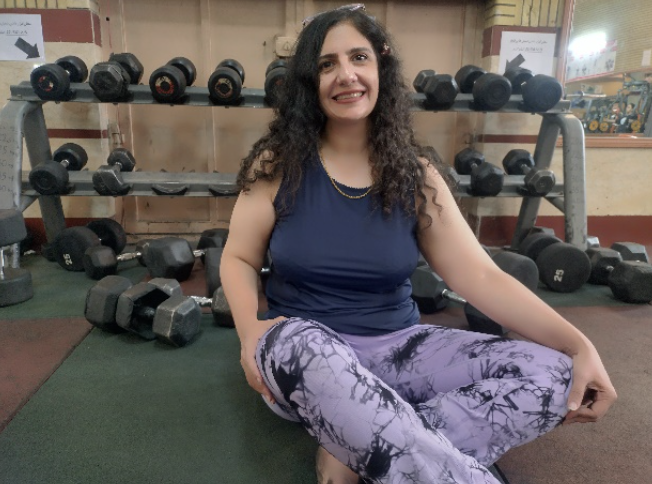
“During the war between Iran, Israel, and the United States, economic pressure and an internet shutdown made daily life exceptionally difficult. I set aside my other writing projects and began recording fragments of my days—small routines, fears, and attempts to keep going. Over time, those fragments grew into roughly 120,000 words of war memories.
Most of those writings are too scattered to stand as a single work, but I felt I needed to remain faithful to what I had lived through and find a way to give meaning to it. ‘Wind, Rain, and the Flowerpot’ emerged from that process. It is my attempt to transform a fragment of lived experience into a story about memory, loss, and the quiet ways life continues after destruction.” —Parvaneh Ravadgar
Parvaneh Ravadgar is an Iranian writer and independent researcher based in Iran. She holds a PhD in Physics from National Cheng Kung University (NCKU), Taiwan. Physics taught her to invite rationality and structure into her life; later, she turned to the human sciences, which she felt she needed just as deeply. After returning to Iran, she began researching, observing, and writing independently as a freelancer. Writing became both a way of making sense of the world and a means of enduring its difficulties. She writes fiction, essays, and novels. Her international work has appeared in Little Fruits Magazine and Braided Way Magazine, and her fiction is forthcoming in Collateral.
